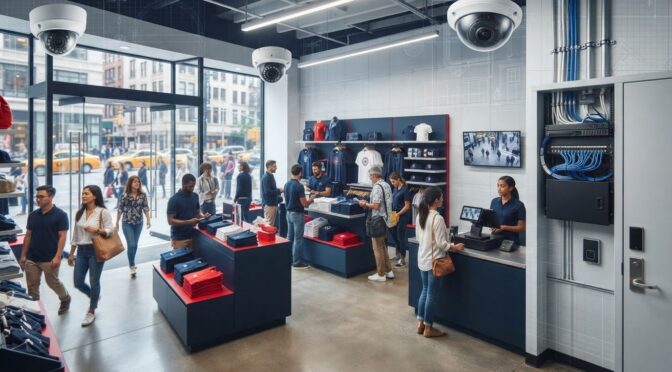
New York retailers lose an estimated $4.4 billion annually to retail theft, yet many storefronts still attempt to protect their margins with off-the-shelf cameras that drop offline when they matter most. Choosing a dependable CCTV system for retail store NYC operations isn’t just about mounting hardware on a ceiling; it’s about capturing clear, admissible footage that holds up under scrutiny and protects your bottom line.
You already know the frustration of inventory shrinkage, untracked register discrepancies, and sidewalk glare blinding your entryway sensors, all while navigating strict NYC electrical standards and commercial lease restrictions. Consumer equipment can’t solve these challenges. In this guide, you’ll discover how to choose, design, and deploy a commercial-grade CCTV system that cuts shrinkage, satisfies NYC building requirements, and protects your retail storefront. We examine essential camera placements, compliant low-voltage cabling infrastructure, and the core hardware standards needed to safeguard your inventory.
Key Takeaways
- Learn how commercial-grade optical sensors and wide dynamic range produce the crisp legal evidence required by the NYPD and insurance adjusters.
- Identify the operational differences between dome, turret, and fisheye camera form factors, as well as on-premise NVR and hybrid storage architectures.
- Discover strategic camera placement techniques that eliminate cash register blind spots and capture clear, eye-level facial details at primary customer entrances.
- Navigate local low-voltage electrical codes and commercial plenum cabling requirements when engineering a CCTV system for retail store NYC properties.
- Understand the benefits of integrating video surveillance with physical access control and heavy-duty locking hardware to build a unified retail perimeter.
Why NYC Retail Stores Require Commercial-Grade CCTV Systems
Protecting a commercial storefront in New York City requires hardware built for demanding environments. Retail corridors face continuous foot traffic, organized theft, and liability claims. Deploying a professional closed-circuit television (CCTV) platform provides reliable oversight, deterring opportunistic behavior while maintaining unbroken records of everyday transactions.
Unlike off-the-shelf consumer cameras that rely on unstable Wi-Fi, professional hardware uses dedicated low-voltage cabling. Wireless equipment often fails when signal congestion peaks or network drops occur. A hardwired commercial setup delivers uninterrupted recording, ensuring that register discrepancies, unauthorized stockroom entries, and fraudulent slip-and-fall claims are resolved quickly with clear visual proof.
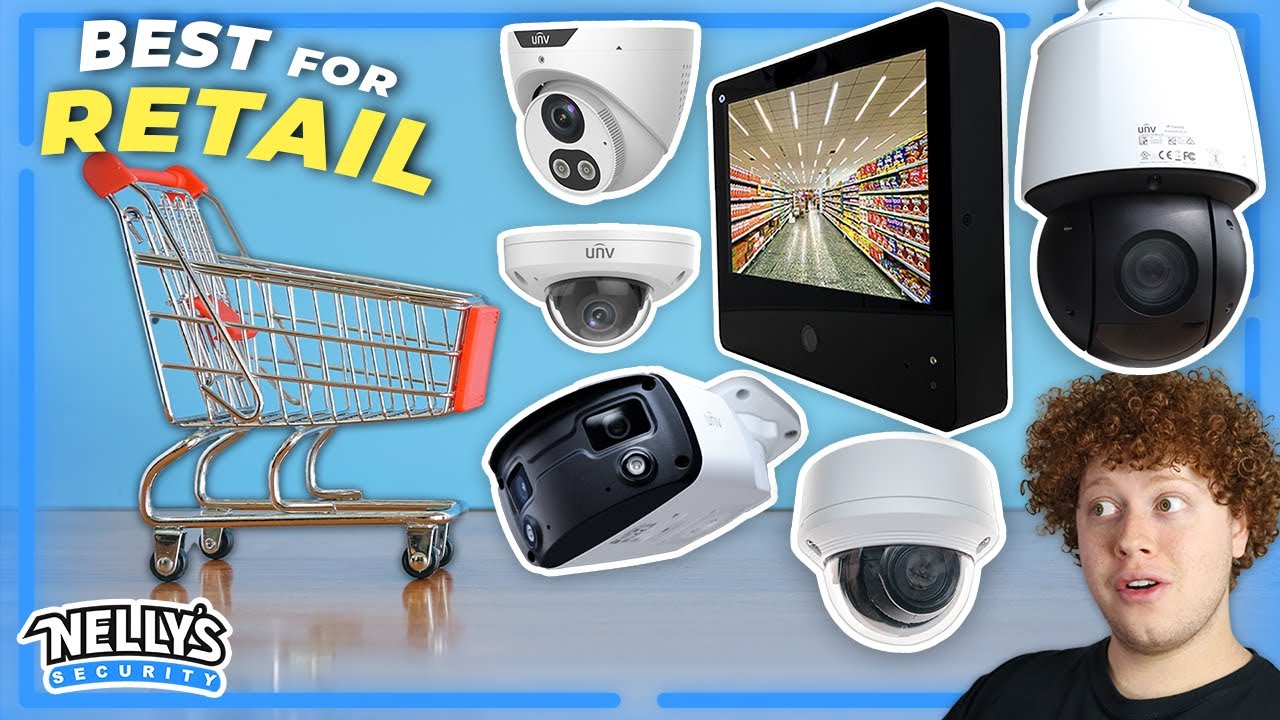
To better understand how specialized hardware protects commercial facilities, watch this helpful video:
Addressing NYC Retail Shrinkage and Shoplifting Realities
Retail shrinkage in Manhattan, Brooklyn, and Queens storefronts occurs through both external theft and internal stock discrepancies. High-visibility public view monitors at entryways establish immediate deterrence by showing visitors they are on camera. Inside the space, strategically aimed lenses track merchandise movement between sales counters and backroom storage, verifying that every item leaving the shelf matches a point-of-sale receipt.
Evidentiary Quality for Law Enforcement and Insurance Claims
Footage must withstand investigative scrutiny to be useful. When configuring a CCTV system for retail store NYC properties, camera specifications must meet clear evidentiary benchmarks:
- Pixels-on-target: Sensor resolution and focal length must provide sufficient optical density to discern specific facial features, clothing markers, and suspect identification at entranceways.
- High frame rates: Cameras monitoring registers must record at sustained, high frame rates to capture rapid hand movements, cash counts, and payment card handling without motion blur.
- Tamper-proof watermarking: Commercial video export formats maintain cryptographic timestamps, ensuring local recordings satisfy NYPD and insurance adjuster submission guidelines.
Core Architecture: Choosing the Right Retail CCTV Hardware
Selecting appropriate surveillance hardware requires matching optical performance to physical retail environments. According to the National Retail Security Survey, retail shrink represents a $112.1 billion challenge across the country, making equipment reliability vital for safeguarding assets. Commercial systems utilize Power over Ethernet (PoE) switches to deliver continuous power and network data through a single low-voltage line, bypassing the transmission dropouts common to consumer hardware.
Camera Form Factors and Vandal-Resistant Housings
Form factor determines both visibility and survivability. Architectural constraints dictate specific body styles:
- Mini-dome cameras: Low-profile domes fit neatly into finished showroom ceilings, preserving boutique aesthetics while offering unobtrusive perimeter monitoring.
- IK10 vandal-rated turrets: Rugged, cast-aluminum housings defend street-level lenses against direct physical impact along exterior storefronts, loading bays, and service alleys.
- Panoramic 360-degree fisheyes: Wide-angle fisheye units eliminate blind zones in compact footprints, delivering comprehensive overhead situational awareness across open merchandise floors.
Optics, Sensor Technology, and Storefront Lighting Challenges
Glass storefronts along busy avenues present extreme lighting variables. Direct midday sunlight reflecting off sidewalks washes out standard camera sensors, reducing approaching figures to dark silhouettes. To prevent this, a CCTV system for retail store NYC applications must incorporate True Wide Dynamic Range (WDR) rated at a minimum of 120dB. True WDR captures multiple exposures simultaneously, balancing harsh exterior glare with darker interior display aisles.
Varifocal lenses allow technicians to optically tune the field of view directly onto cash drawers or narrow corridors. For unlit stockrooms and after-hours street perimeters, specialized low-light sensors maintain vivid color details rather than falling back to grainy black-and-white infrared capture.
NVR Storage vs. Cloud Solutions for Retail Businesses
Video storage design directly impacts operational uptime and ongoing expenses. Local Network Video Recorders (NVRs) maintain steady writing speeds to internal hard drives, ensuring recordings continue even during commercial internet outages. A multi-bay NVR configured with RAID disk mirroring shields historical footage from single hard drive failures, easily achieving a 30-day continuous archive without recurring fees. For organizations balancing localized hardware reliability with remote management needs, consulting an experienced physical security provider like Unlimited Applications Security helps align storage architectures with operational compliance.
Strategic Camera Placement for Retail Store Layouts
Camera placement determines whether your footage serves as actionable proof or leaves critical blind spots. Generic overhead views rarely capture the specific details needed to resolve inventory discrepancies. Effective deployment of a CCTV system for retail store NYC spaces requires targeting the exact transaction points, high-traffic corridors, and structural obstructions unique to urban storefronts.
Point-of-Sale (POS) and Checkout Counter Monitoring
Cash registers represent the highest volume of financial movement in any retail store. To capture clear evidence, mount dedicated varifocal cameras directly above each payment terminal. Angles should isolate cash drawers and payment handling surfaces clearly without recording customer pin pads. Aligning these video feeds with electronic point-of-sale logs makes it simple to cross-reference customer voids, returned items, and cash-drawer openings with visual proof.
Sales Floor, Aisle Navigation, and High-Value Display Zones
Tall gondola shelving and structural pillars often obstruct ceiling-mounted cameras. Positioning lenses in opposing cross-angles along linear aisles maintains line-of-sight tracking as customers handle merchandise. For high-theft items, tighten focal lengths directly onto locked display cases and checkout display shelves. While broad coverage is essential, layouts must respect legal boundaries: state regulations strictly prohibit video surveillance in restrooms, fitting rooms, and employee changing areas.
Stockrooms, Freight Entrances, and Rear Exit Corridors
Inventory security does not end at the sales floor. High-risk transfer points require continuous recording standards similar to those outlined in New York’s security regulations for sensitive retail facilities. Technicians must secure perimeter pathways with purposeful placements:
- Freight and delivery intake: Position high-resolution lenses over loading docks to inspect deliveries, log vendor visits, and verify inbound carton counts.
- Waste corridors and fire exits: Cover internal trash compactor routes and back-alley emergency egress doors to ensure merchandise isn’t removed under the guise of trash disposal.
- Safe storage and counting rooms: Monitor cash vaults and sensitive server racks using fixed, narrow-angle lenses to record authorized credential use.
NYC Commercial Code Compliance, Cabling, and Landlord Regulations
Installing commercial surveillance in New York City involves much more than simply running network lines across a drop ceiling. City agencies and commercial property managers enforce stringent low-voltage fire standards and structural preservation rules. Failing to follow these building guidelines can result in stop-work orders, lease violations, or forced hardware removals.
Navigating NYC Commercial Lease Requirements and Landlord Approvals
Commercial landlords throughout the five boroughs routinely mandate detailed alteration agreements prior to any drilling. Standard lease clauses require licensed contractors to submit complete architectural scopes of work along with compliant certificates of insurance. Historic properties, particularly within designated NYC Landmarks Preservation Commission districts like SoHo or Brooklyn Heights, strictly prohibit destructive facade penetrations. To protect historic plaster and exposed brick without voiding lease covenants, technicians route cabling through paintable, surface-mounted raceways that match interior trim.
Low-Voltage Cabling Standards and Fire Safety Regulations
The New York City Electrical Code sets strict physical parameters for all structured communication cabling. Dropped ceiling cavities often double as environmental air handling plenums, making correct jacket ratings a non-negotiable safety requirement. When deploying a CCTV system for retail store NYC applications, low-voltage lines must meet specific fire-resistance thresholds:
- CMP-rated plenum cabling: Technicians must pull CMP (Communications Plenum) fire-rated Cat6 jacketed wire through HVAC air spaces to prevent toxic smoke generation during a fire event.
- UL-listed firestopping: Any horizontal or vertical low-voltage core drilling between retail floors, basement inventory zones, or adjacent tenant partitions must be packed with approved intumescent firestop collars or sealants.
- Metallic conduit runs: Exposed wiring throughout mechanical basements, customer parking garages, and utility closets must run inside rigid electrical metallic tubing (EMT) to protect data paths from physical damage and rodents.
Proper adherence to local electrical guidelines ensures long-term operational stability and prevents landlord disputes. To protect your commercial facility with fully compliant low-voltage cabling, schedule an on-site installation consultation with a certified physical security specialist.
Deploying an Integrated Retail Security System with Unlimited Applications Security
A resilient security installation follows a systematic engineering process rather than guesswork. Since 1994, Unlimited Applications Security Company has deployed commercial infrastructure across New York City, designing physical perimeters that withstand daily operational strain. Our technicians execute a structured five-step implementation workflow for every commercial project:
- On-site vulnerability audit: Technicians inspect the sales floor, backroom storage, POS registers, and architectural blind spots to define exact coverage parameters.
- Custom blueprint engineering: Engineers determine optimal camera positions, optical sensor dimensions, and lens focal lengths for each zone.
- Structured low-voltage wiring: Installers pull fire-rated Cat6 cabling through compliant metallic conduits and surface raceways, protecting every data run.
- Hardware and user configuration: Technicians commission recording units, set administrative permission tiers, and establish secure local network pathways.
- System unification: Installers coordinate surveillance streams directly with electronic door access points and primary perimeter hardware.
Unifying CCTV with Commercial Access Control and Door Hardware
Surveillance cameras deliver maximum value when tied directly to physical locking mechanisms. When designing a CCTV system for retail store NYC environments, linking video feeds with electronic access control systems creates an indisputable operational record. Card readers, keypads, and fobs installed at stockroom entrances match employee access logs against high-definition visual recordings.
Surveillance cameras also interface with electric strikes and heavy-duty magnetic locks on delivery portals, recording authorized credential use as well as forced-door anomalies. Coordinating this hardware alongside commercial video entry stations allows store staff to visually confirm courier identities before unlocking back doors, mirroring the structural standards detailed in our guide to professional intercom installation.
Professional Field Commissioning and Ongoing Local Support
Field commissioning turns hardware into an active defense network. Technicians calibrate optical focal depths, adjust motion-detection masks to avoid sidewalk false triggers, and balance infrared night-vision output across dark loading alleys. Once the physical setup is tuned, we walk retail managers through event search parameters, mobile viewing setups, and tamper-resistant evidentiary export workflows.
With over 30 years of continuous field integration experience across the five boroughs, our locally dispatched technicians resolve hardware malfunctions, replace worn door components, and expand camera networks quickly, keeping your retail operation secure and fully operational.
Build a Resilient Physical Defense for Your Retail Storefront
Protecting a commercial enterprise in New York City demands durable hardware and precision engineering. A consumer camera cannot withstand urban operational demands or satisfy local evidentiary benchmarks. Selecting a purpose-built CCTV system for retail store NYC properties ensures sharp optical clarity under harsh window lighting, continuous on-site recording during network failures, and full compliance with strict commercial electrical codes.
Surveillance functions best when integrated into a unified defense system. Pairing optical coverage with heavy-duty magnetic locks, electric strikes, and electronic access keypads creates complete perimeter security across your entire sales floor, inventory rooms, and delivery corridors.
With over 30 years of hands-on physical security installation and repair experience across all five boroughs since 1994, our local team knows how to overcome unique building layouts and strict landlord requirements. When you are ready to eliminate store blind spots and secure your assets with commercial-grade reliability, schedule an on-site retail security audit with Unlimited Applications Security Company to protect your business for the years ahead.
Frequently Asked Questions
How many CCTV cameras does an average retail store in NYC need?
Most small-to-midsize retail storefronts require between 6 and 12 cameras to achieve comprehensive visual coverage. Compact boutiques may adequately cover operations with 4 to 6 units focusing on entryways, checkout counters, and rear inventory portals. Larger commercial footprints with divided sales aisles, mezzanine levels, and expansive stockrooms often require 16 or more cameras to eliminate architectural blind zones completely.
Can I install a commercial CCTV system without landlord approval in New York City?
No, standard commercial leases in New York City require written landlord approval before performing low-voltage installations or making building alterations. Property managers require formal scopes of work, certificates of insurance from licensed technicians, and assurances that cabling won’t damage architectural assets. Historic properties face additional restrictions enforced by the Landmarks Preservation Commission, requiring non-invasive surface raceways instead of masonry drilling.
Are wireless security cameras suitable for NYC retail storefronts?
Wireless cameras aren’t recommended for commercial retail operations in urban environments. Dense Manhattan and Brooklyn retail corridors suffer heavy Wi-Fi frequency interference from adjacent commercial tenants and pedestrian foot traffic, leading to dropped recording streams. Battery-powered units lack continuous recording reliability, while dedicated Power over Ethernet hardwired cabling guarantees uninterrupted transmission during critical incidents.
How long must a retail store retain surveillance video footage for legal claims?
Retail stores should retain continuous video archives for a minimum of 30 to 90 days. While basic liability incidents may be identified quickly, commercial insurance disputes, worker compensation claims, and chargeback conflicts frequently arise weeks after an occurrence. High-capacity local hard drives configured in RAID arrays allow business owners to preserve months of historical footage without incurring expensive cloud retention tiers.
What is the best camera resolution for monitoring cash registers and point-of-sale areas?
A minimum of 4K (8 megapixel) resolution paired with an adjustable varifocal lens delivers the optical density needed over cash registers. High pixel density allows store owners to clearly read currency denominations, inspect payment card interactions, and track hand movements during transaction disputes. Lower resolution sensors often blur quick manual actions or pixelate fine details under digital magnification.
Does commercial CCTV installation require running cables through fire-rated plenum ceilings?
Yes, if your commercial retail ceiling space functions as an environmental air return for HVAC systems, the NYC Electrical Code mandates CMP-rated plenum cabling. Standard PVC-jacketed wire emits toxic fumes and spreads flames quickly when exposed to fire. Professional installers must run CMP-rated network cabling and pack structural wall penetrations with approved firestop sealants to pass municipal building inspections.
Can security cameras be integrated with magnetic locks and store access control?
Yes, an effective CCTV system for retail store NYC spaces links seamlessly with electronic access control hardware. When integrated, security cameras automatically bookmark visual events whenever keypads, card readers, or magnetic locks cycle at inventory doors. This hardware coordination enables retail managers to visually verify delivery couriers through video entry stations and verify that unauthorized door forced-openings trigger immediate footage flags.