

How Apartment Door Buzzers Work
An apartment door buzzer is a chain of separate parts, and understanding the chain is what makes a fault diagnosable.
This guide explains what happens between a visitor pressing a button and the door unlocking, what each component is called, and which system types are common in New York City buildings.
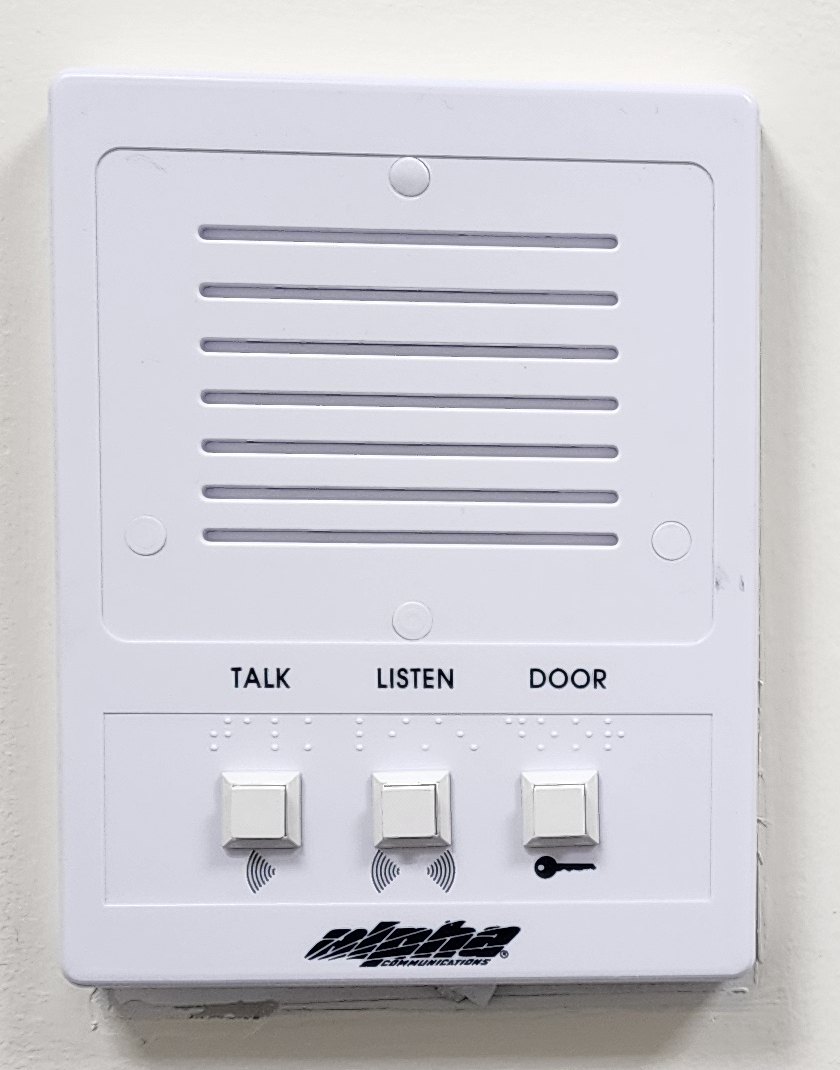
What Happens When Someone Presses the Button
An apartment door buzzer is a small chain of separate parts, and understanding the chain is what makes a fault diagnosable. When a visitor presses a button at the entrance, five things happen in sequence.
- The lobby panel sends a call signal to one specific apartment, selected by the button or by a directory code.
- The signal travels through building wiring, usually a riser running vertically through the building with branches to each unit.
- The tenant station inside the apartment rings, and the resident can speak with the visitor.
- The resident presses the door release button, which energizes a relay.
- The relay powers the electric strike or magnetic lock at the entrance, and the door unlocks for a set number of seconds.
The audio path and the door release path are separate circuits that share the same wiring and equipment. This is why a buzzer can sound perfectly while the door refuses to open, and why the reverse can also happen.
The Parts, and What Each One Is Called
Lobby panel
Also called the entry panel, door station or entrance panel. It holds the buttons or keypad, the speaker and microphone, and in video systems the camera. It is the part visitors interact with.
Tenant station
Also called the apartment station, handset or intercom station. It is the unit inside the apartment that rings, carries audio, and holds the door release button.
Transformer and power supply
Low-voltage intercoms do not run on line voltage. A transformer steps building power down to the level the system uses. Because every station depends on it, a failed transformer takes the entire building down at once.
Door release relay
The switch that connects the door release button to the lock. It is a frequent point of failure and a frequent source of misdiagnosis, since a failed relay makes the intercom appear broken when the communication side is fine.
Electric strike and magnetic lock
Two different ways of holding a door. An electric strike replaces the plate the latch sits in and releases the latch when energized. A magnetic lock holds the door shut with an electromagnet and releases when power is cut. They fail differently and are diagnosed differently.
Riser wiring
The shared cable running through the building that connects the lobby panel to every apartment. In older buildings this wiring is frequently the oldest part of the system and the least documented.
Types of Systems Found in NYC Buildings
Hardwired audio intercom
The most common system in New York City apartment buildings, walk-ups and brownstones. Audio only, with a physical button per apartment. Many are decades old and still fully serviceable.
Telephone entry
Instead of a dedicated station in each apartment, calls route to a resident’s phone line or mobile number. The entrance panel holds a directory, and the resident presses a key on their phone to release the door. Common in buildings that wanted to avoid rewiring every unit.
Video intercom
Adds a camera at the entrance and a screen at the tenant station, so residents can see who is at the door before releasing it. Requires more wiring capacity than an audio-only system, which is the usual constraint when upgrading an older building.
IP and app-based systems
Newer systems that route calls over the building network or the internet, sometimes to a smartphone app rather than a physical station. These depend on network reliability in a way older systems did not.
Why the Age of a System Matters Less Than People Expect
A hardwired buzzer system from the 1970s is not automatically at the end of its life. These systems were built simply, with few components, and most of those components are individually replaceable. What determines whether a system is worth keeping is not its age but whether compatible parts remain available, whether the riser wiring is intact, and whether faults are isolated or appearing repeatedly across different parts of the building.
Frequently Asked Questions
What is an apartment door buzzer called?
It goes by several names depending on which part is meant. The unit inside the apartment is the tenant station or apartment station. The unit at the entrance is the lobby panel, entry panel or door station. The full system is an intercom, door entry system, or telephone entry system when tenant calls route through a phone line or cellular connection.
Do apartment buzzers still exist?
Yes. A large share of New York City apartment buildings, walk-ups and mixed-use properties still run hardwired audio buzzer systems, many of them decades old. These remain repairable when compatible parts are available, and they are still installed today in buildings where rewiring for video is impractical.
How does an apartment buzzer actually unlock the door?
Pressing the door release button in the apartment energizes a relay, and the relay powers an electric strike or magnetic lock at the entrance, which releases the door for a set number of seconds. The audio path and the door release path are separate circuits, which is why a buzzer can sound while the door stays locked.
What is the difference between an electric strike and a magnetic lock?
An electric strike replaces the metal plate the door latch sits in and releases that latch when energized. A magnetic lock holds the door closed with an electromagnet and releases when power is cut. They fail in different ways and are diagnosed differently, so identifying which one a door uses is an early step in any door release repair.
What is a telephone entry system?
A telephone entry system routes visitor calls to a resident's phone line or mobile number instead of to a dedicated station inside the apartment. The entrance panel holds a directory, and the resident presses a key on their phone to release the door. It is common in buildings that wanted controlled entry without rewiring every unit.
Why does my intercom hum or pick up other apartments?
Persistent hum usually indicates a power supply or grounding problem, or degraded wiring. Hearing other apartments indicates a wiring fault where conductor pairs have shorted or been cross-connected, which often shows up after unrelated building work.
Need an intercom or buzzer problem looked at?
Describe the property, the system and what is happening. Most qualifying common repairs are flat-rate at $150–$250 with a 30-day repair warranty.
Phone: (347) 433-6873
Email: info@uasecurity.com