The lowest hardware quote can become the most expensive security project if it leaves out installation complexity and compliance. That’s why the commercial security system cost NYC businesses should plan for depends on more than cameras, intercoms, or access control equipment. Building conditions, labor, and door hardware can all affect the scope, and an incomplete quote can leave important work and costs unaccounted for.
It’s reasonable to want clear pricing before committing, especially when NYC labor is costly and an FDNY inspection is a concern. This guide explains the main factors that shape a project budget without giving a one-size-fits-all figure. You’ll see what to check in an itemized estimate, how existing wiring and door hardware can affect installation, and which questions can uncover potential add-on fees.
We’ll also offer a practical framework for comparing Aiphone and Siedle systems. Focus on the proposed equipment and installation scope rather than relying on brand names alone. Evaluating an existing system before recommending replacement can help clarify whether repair, an upgrade, or a full replacement best fits the building’s needs.
Key Takeaways
- Use the commercial security system cost NYC breakdown to compare complete project scopes, not hardware quotes alone.
- Assess audio-only and video intercom options against your building’s entry needs and tenant access requirements.
- Compare magnetic locks, electric strikes, and credential options based on existing door hardware and the work each opening requires.
- Ask vendors to itemize labor, cabling, conduit, and structural modifications so installation assumptions are clear.
- Before replacing a legacy system, consider whether targeted repairs and brand-specific expertise can extend its useful life.
Understanding commercial security system cost NYC businesses should expect
The commercial security system cost NYC businesses face is shaped by more than equipment selection. Building access rules, existing infrastructure, and the amount of work needed to install and integrate each component all affect an estimate. A generic national price range can miss local conditions, so compare proposals by scope rather than by a single headline number.
Why Location and Building Type Matter in NYC
A Manhattan high-rise and a Brooklyn warehouse present different installation conditions. A high-rise project may involve coordinating access, work hours, and building approvals. A warehouse may need longer cable runs or coverage across a large open space. In both cases, the building layout and available wiring routes can change the work involved.
Older buildings add another variable. A pre-war property may have legacy intercom wiring or door hardware that doesn’t match a proposed replacement system. Before assuming everything needs to be replaced, have the existing equipment assessed. A repair-first approach can preserve usable components and help avoid unnecessary work.
Commercial lease terms can also affect equipment choices. Check whether the landlord requires approval for alterations, specifies work procedures, or sets conditions for entry hardware. Confirm these requirements before comparing bids so the proposed scope reflects what the building will allow.
Baseline Components of a Professional System
Many commercial security plans combine three physical security functions: intercoms to manage visitor communication, access control to manage entry, and CCTV to support observation and review. The right mix depends on entrances, occupancy, and operating needs. The Physical security overview provides useful context for how deterrence, access control, and surveillance work together.
Off-the-shelf devices may suit a simple, standalone need. A complete system also needs to account for how components connect, how users will operate them, and whether existing door hardware and wiring can be reused. Ask vendors to identify what is included, what must be modified, and how each part will work with the rest of the system.
Hardware and ongoing software charges are separate considerations. Some equipment is purchased upfront, while connected systems may involve recurring licensing or support fees. Request a written breakdown of any ongoing charges and what they cover before approving a proposal.
Why a Site Survey Improves an Estimate
A site survey helps turn assumptions into a defined scope. The estimator can review entrances, wiring paths, door condition, and access constraints, then identify potential structural or installation work. Ask for those findings to appear in the proposal, along with exclusions and items that could change the final scope. Unlimited Applications Security Company assesses and repairs intercom systems and works with CCTV and access control systems, including brand-specific equipment.
Hardware Breakdown: Intercoms and Entry Systems
Intercom choices affect more than the equipment at the entrance. The right system must suit visitor volume, staff workflows, existing wiring, and how the building handles calls. These details shape the commercial security system cost NYC estimate, so compare proposed functions and installation scope, not just the device type.
Video Intercoms: The Modern NYC Standard
Audio-only intercoms let staff speak with visitors before granting entry. Video adds visual verification, which can help staff assess deliveries and unfamiliar visitors from a receiving desk or another authorized location. Its value depends on how the building manages entry; video isn’t a substitute for clear visitor procedures.
Mobile access can add convenience, but it may involve compatible intercom equipment, network work, and recurring software or service charges. Ask the installer to identify which functions are included and which depend on subscriptions or other systems. A proposal should also explain what happens if the network connection is unavailable.
Wiring matters. Incorrect connections or poorly assessed existing circuits can lead to unreliable audio, video, or door release. Review the practical steps in this guide to professional intercom installation, especially if the building has older equipment or mixed wiring.
Telephone Entry and Multi-Unit Solutions
Large office lobbies need a telephone entry system that helps staff manage calls and route visitors to the right tenant. Before selecting one, confirm how the directory will be maintained, who can authorize entry, and how the system will handle tenant turnover. These operating details can matter as much as the entry panel itself.
An older buzzer system may not require full rewiring. A technician can assess its wiring, controls, and door-release hardware to determine whether components can be retained or adapted. For legacy systems, including Lee Dan and Tektone, ask about the condition of installed equipment, available replacement components, and what the estimate assumes about reuse. Maintenance needs depend on the system’s condition and the work performed.
Choosing IP or Hardwired Equipment
IP-based intercoms can support network-connected functions, while traditional hardwired systems rely on dedicated wiring. Neither option is automatically less costly: the existing infrastructure, required features, and compatibility with entry hardware affect installation scope. Ask the vendor to separate equipment, wiring changes, setup, and any recurring charges in the estimate.
For help assessing intercom repair or replacement options, review UA Security’s intercom services. An evaluation can clarify whether the current system can be repaired, upgraded, or should be replaced.
Electronic Access Control and Door Hardware Costs
Access control estimates depend on both the credentials people use and the hardware fitted to each door. A keypad, card or fob reader, and mobile credential have different equipment and management needs. The condition of the door and frame matters just as much. That’s why the commercial security system cost NYC proposal should identify each opening, the hardware included, and any required modifications.
Magnetic Locks and Fire Safety Compliance
Magnetic locks are one option for controlled entry, but they aren’t automatically the right choice for every door. Installation can involve mounting the lock and armature, routing power and control wiring, and planning how occupants exit during normal operation and emergencies. Depending on the door and system design, sensors or manual release devices may also be part of the specified setup.
Fire-safety and building requirements can affect the design. Don’t assume a generic lock package meets the requirements for a particular opening. Have the project reviewed against current applicable requirements, and ask the installer to document the proposed release method and any related hardware. This can help identify compliance-related work before installation, rather than after an inspection raises questions.
Electric Strikes: Discreet and Durable
An electric strike can release a compatible latch while leaving the door’s existing lockset in place. That may reduce the need for hardware changes on some internal doors, but the frame, latch, door condition, and wiring all need assessment. A frame that requires cutting or reinforcement can change the labor involved. Surface-mounted components may avoid some invasive work but won’t suit every opening.
Compatibility is specific. Confirm the strike type, door hardware, and access control or intercom connection in the estimate. In an intercom repair, the fault may be in the release circuit, wiring, or strike rather than the intercom itself. See how intercom repair in NYC can include evaluating the door-release path.
Credentials and System Management
Cards and fobs are familiar options for staff access. Mobile credentials may offer a different user experience, but can require compatible equipment and ongoing platform fees. A standalone controller may suit a small number of doors with simple access needs. Centralized management can make it easier to administer credentials across multiple openings, but adds system configuration and potentially recurring charges. Ask vendors to separate hardware, installation, setup, and recurring costs.
Brand names alone don’t establish the right price tier. Compare the proposed Aiphone or Siedle equipment by its functions, compatibility with existing hardware, and fit for the building’s needs. Unlimited Applications Security Company works with both brands and handles electric strikes and magnetic locks. To review an existing entry setup, consider access control and door hardware options.
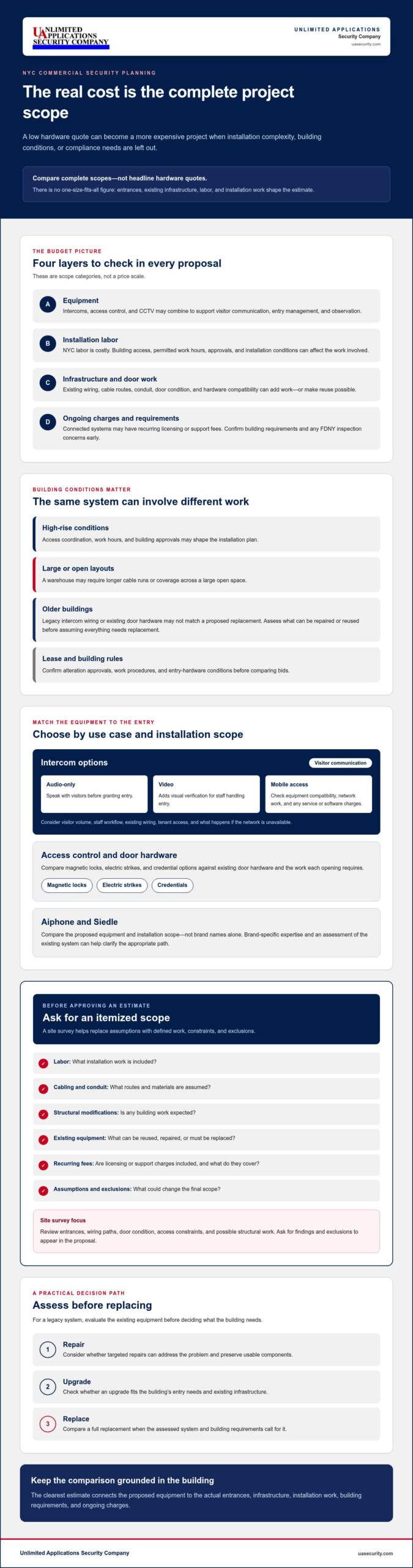
The Hidden Drivers of NYC Installation Estimates
Equipment is only part of an installation estimate. Specialized labor, building logistics, wiring routes, and project-specific approvals can all affect the work required. In New York City, access may involve coordinating with building management, following designated work hours, arranging equipment movement, and allowing time to reach a work area. Ask vendors to show how these conditions are reflected in the proposed scope.
Logistics and Labor in the Five Boroughs
Parking, loading access, security desk procedures, elevator reservations, and restrictions on work hours can shape how efficiently a crew completes a job. Travel between a high-rise loading area and the installation location may also add time. Request an estimate that identifies labor assumptions, building coordination, and any conditions that could change the work plan.
Experience with existing wiring and hardware can help a technician diagnose a problem before recommending replacement. Unlimited Applications Security Company works on intercoms and physical security systems in NYC. If you’re considering after-hours or emergency work, confirm availability, scheduling terms, and any related charges directly with the provider rather than assuming they’re included.
Wiring, Compliance, and Installation Scope
Conduit and cable routes can be straightforward in an accessible space, or more involved if walls, ceilings, or door frames need modification. For CCTV, the system design may use network cabling such as Cat6 or existing coaxial infrastructure, depending on the equipment and site conditions. Ask the installer to explain the cabling approach, where new conduit is needed, and whether patching or other building work is included or excluded.
Commercial projects may also require building coordination or compliance documentation. Requirements depend on the system and property, so ask which reviews, approvals, or filings apply and who is responsible for them. Work that skips appropriate assessment or documentation can create rework and delays. A low bid is not comparable if it leaves out necessary steps.
CCTV Storage and Camera Placement
Recording design affects both installation and ongoing ownership. An on-site network video recorder (NVR) stores footage on local hardware, while cloud-based storage relies on a remote service and may involve recurring charges. Compare retention needs, access requirements, equipment, and any ongoing fees before choosing. Avoid paying for storage or camera coverage that doesn’t serve a defined purpose.
Camera placement should prioritize entrances, transaction areas, and other locations where useful coverage is needed. A site review can identify blind spots and overlapping views, helping the design balance coverage with the number of cameras. Ask for a camera layout and a clear breakdown of cabling, mounting, setup, and storage assumptions.
For an estimate grounded in your building’s conditions, discuss your CCTV and security system needs with UA Security.
Maximizing ROI: UA Security’s Pragmatic Approach
A full replacement isn’t always the most cost-effective answer. If an intercom or entry system has a localized fault, a careful diagnosis may show that repair or a targeted upgrade can restore function while preserving usable equipment. This repair-first approach helps building owners make decisions based on the system’s condition, not an assumption that older hardware must be discarded.
The Financial Case for Intercom Repair
Start by identifying what has failed. A technician can assess the intercom, its wiring, and the door-release connection to determine whether the issue is limited or points to broader system problems. Replacing components before diagnosing the cause can add expense without addressing the fault.
Brand-specific experience is useful with systems from Aiphone, Siedle, and Comelit. Their equipment and existing installations can differ, so compare proposals by the diagnosed issue, recommended work, and components to be retained or replaced. Unlimited Applications Security Company repairs intercom systems from these brands. Repair may not be appropriate if equipment is extensively damaged or no longer supports the building’s needs, but an assessment can clarify the options.
Building a Practical Security Roadmap
For a larger property, phased improvements can help direct investment to the most pressing gaps first. Review entrances with frequent visitor traffic, doors where access is difficult to manage, and locations where staff need better visibility. Then prioritize work according to the building’s operating needs and the condition of its existing equipment.
Before adding new technology, confirm that it can work with the current intercom, access control, and CCTV hardware. A staged plan should identify what can remain, what needs repair, and which upgrades depend on other work. This makes the commercial security system cost NYC easier to evaluate over time, rather than treating every component as an immediate replacement.
Preventative attention can also help owners catch wear or recurring faults before they disrupt normal operation. Keep a record of repairs and system changes, and ask what routine checks are appropriate for the equipment installed. A methodical assessment from a technician familiar with NYC buildings can help turn those findings into a clear, prioritized plan.
Make Your Next Security Investment With Confidence
A useful budget starts with a clear scope, not a low headline quote. Compare proposals for the work they include, how existing equipment will be handled, and any ongoing system costs. A careful evaluation can also show whether targeted repairs make more sense than replacing a functioning legacy system.
The commercial security system cost NYC businesses face varies with building conditions and project requirements. Start by identifying the entry points that matter most, then match hardware and installation work to those needs. That approach supports a practical plan without assuming every component must be upgraded at once.
Unlimited Applications Security Company installs and repairs intercom systems, including Siedle, Aiphone, and Comelit equipment, and works with access control, CCTV, electric strikes, and magnetic locks. To discuss your building’s intercom, access control, or CCTV needs, request a professional security assessment.
With a defined scope and informed guidance, you can move forward with a security plan that fits your property and priorities.
Frequently Asked Questions
What is the average cost of a commercial video intercom in NYC?
There isn’t one reliable average for every NYC commercial building because the total depends on the entrance, wiring, door hardware, and system features. A single entrance with usable infrastructure has a different scope from a multi-tenant building that needs new cabling and broader integration. Ask for an itemized estimate covering equipment, installation, door-release connections, and any recurring fees. A site assessment can clarify what the project actually requires.
Are magnetic locks legal for commercial fire exits in New York City?
Magnetic locks aren’t automatically suitable for every fire exit, and whether a specific installation is allowed depends on the door, egress design, and applicable requirements. Don’t rely on a generic lock package or assume a particular release method is compliant. Have the proposed hardware and release design reviewed against current NYC requirements by qualified professionals, and confirm any required approvals before work begins. Requirements can differ by building and installation.
How much does it cost to add keyless access control to an existing door?
The cost depends on the credential type, controller, wiring, and condition of the existing door and frame. A door that can accept compatible hardware may need less modification than one requiring a new lock, frame work, or extended cabling. Software or cloud features may also add recurring charges. Ask for a per-door breakdown that separates equipment, installation, door hardware, setup, and ongoing fees before comparing proposals.
Why is professional installation more expensive than buying hardware online?
Online hardware pricing doesn’t include a site assessment, installation labor, wiring, door modifications, system configuration, or testing. In NYC, building access procedures, work-hour restrictions, and older infrastructure can add complexity. Professional installation also helps confirm that equipment works with the existing intercom or door hardware and that the proposed setup addresses applicable requirements. Compare complete scopes, not just the purchase price of a device.
Can I repair my building’s old Siedle or Comelit intercom system?
Yes, an older Siedle or Comelit intercom may be repairable, depending on its condition and the source of the fault. A technician can assess the panel, wiring, stations, and door-release connection before recommending replacement. If the issue is limited, repair may preserve usable equipment; if the system has broader failures or no longer meets building needs, replacement may be more appropriate. Unlimited Applications Security Company repairs intercom systems from these brands.
How often should a commercial security system be serviced in NYC?
There isn’t a single service interval that fits every commercial security system. Follow the equipment manufacturer’s maintenance guidance and consider the system’s age, usage, building conditions, and history of faults. Document inspections, repairs, and changes, and address recurring issues rather than waiting for a complete failure. For an older intercom or access system, ask a qualified technician to recommend a maintenance schedule based on the installed hardware.
Do commercial security systems in NYC require special permits?
Some systems have specific registration or filing requirements, while others may not. In NYC, commercial alarm systems that require police response must be registered with the NYPD, with the permit renewed annually. Security work integrated with fire-safety components may also be subject to installer and filing requirements. Confirm current requirements for your exact scope with the appropriate authorities or qualified professionals before work starts.
What is the difference between an electric strike and a magnetic lock in terms of cost?
Neither option is always less expensive. An electric strike may reuse a compatible lockset, while a magnetic lock can require different mounting, wiring, and release components. Door and frame condition, installation access, and any needed modifications affect the estimate for both. Compare the complete installed scope, including control hardware and release design, and ensure the selected equipment suits the opening and applicable building requirements.