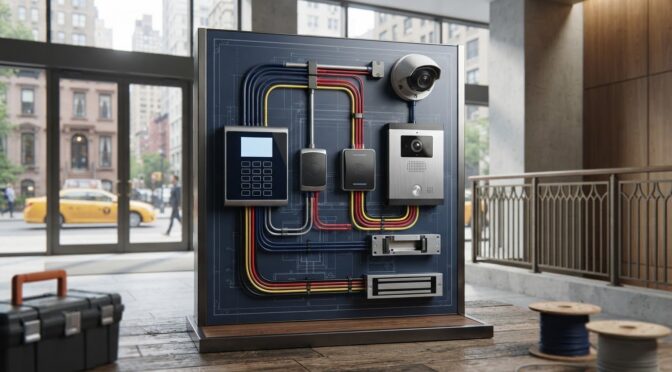
The keypad may be the easiest part of a keyless entry upgrade. The harder question is whether your door, frame, lock hardware, and building routines can support the system you choose. For keyless entry system installation NYC property owners need to compare more than a reader: the setup must work for tenants, staff, and visitors.
It’s reasonable to wonder whether an existing door can be adapted or whether electronic access will make everyday entry more complicated. This guide compares keypad, card, fob, and managed access options, and explains what to consider before choosing one for your property.
You’ll also learn what a site assessment should review, including door condition, access-control components, and building requirements that may affect the work. Unlimited Applications Security Company works with access control systems and related door hardware, including electric strikes and magnetic locks. Understanding how these parts fit together can help you plan an installation around the building, not just the credential readers.
Key Takeaways
- Compare keypad codes, cards or fobs, mobile credentials, and managed access by how people will use and administer them.
- Use a site-specific assessment to check whether the existing door, frame, lock, wiring, and power can support the planned system.
- Before planning keyless entry system installation NYC, document who needs access, when they need it, and how visitors should enter.
- Ask the installer to explain how access control will work with the building’s door hardware and existing intercom setup.
- Request a written scope that identifies project assumptions, equipment, wiring, testing, and user handover.
Keyless Entry Systems in NYC: What They Change for a Building
Keyless entry controls who can enter without relying solely on a conventional metal key. Depending on the setup, users may enter a code or present a card, fob, or other credential. Property owners consider these systems to manage access, respond when credentials are lost, and simplify entry routines. The practical question is how the system fits the door and the people who use it.
A keypad or reader is only the visible part of a system. Broader electronic access control connects credentials to decisions about who may enter and how access is administered. A keypad alone doesn’t determine how codes are issued, who can change them, or how the door behaves if a component or power source fails.
This video shows one example of a keypad deadbolt installation in Queens, NYC. It illustrates a device installed at a door, but a single-door installation isn’t a complete plan for every building.
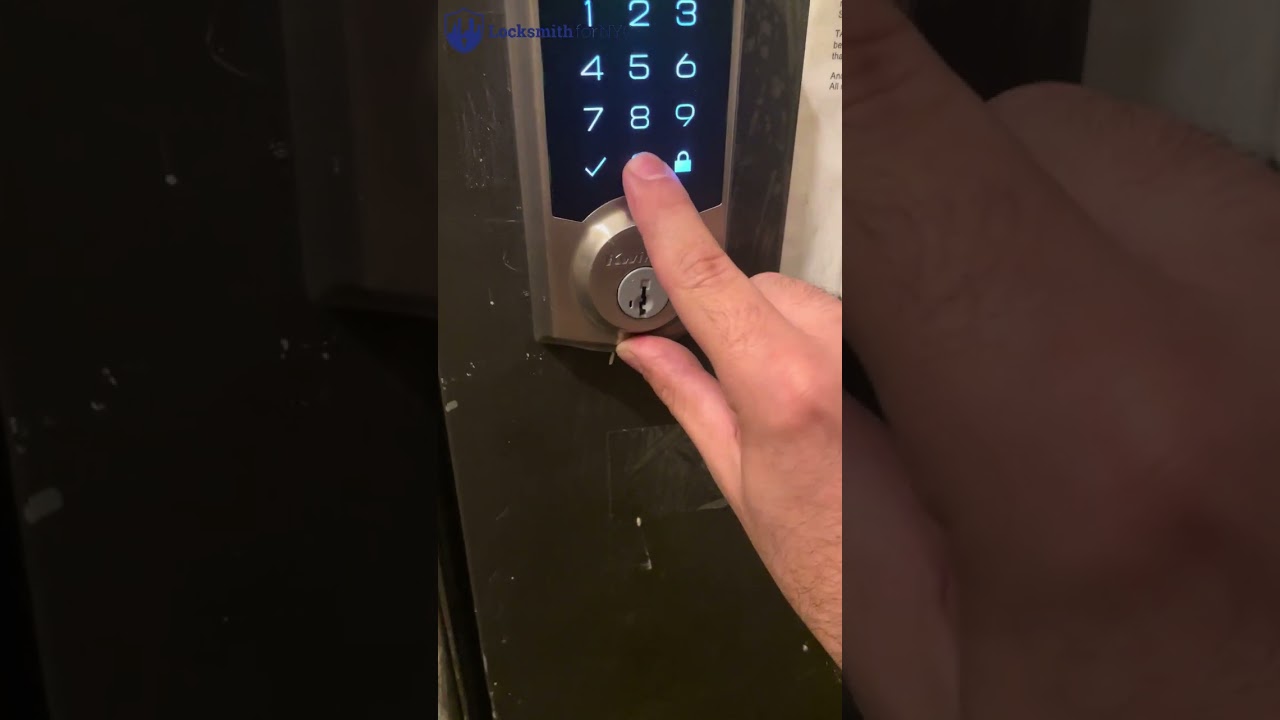
What does a keyless entry installation include?
A design may include a reader or input device, credentials, a controller that processes access requests, lock hardware, and a power source. The exact scope depends on the door and frame, lock type, available wiring and power, and the building’s access requirements. If the entrance already has an intercom, assess it alongside the access-control equipment and door hardware rather than treating the job as a reader-only change.
That’s why keyless entry system installation NYC should start with the complete door setup. An access control system may coordinate components and access administration, while a standalone device may serve one door with a more limited management approach. The right choice depends on the property’s needs, not the appearance of the keypad.
Which NYC properties may consider keyless access?
Multifamily entrances, office doors, and other controlled-access points have different priorities. In a residential building, tenant turnover and shared entry routines affect how credentials are assigned and updated. An office may need access to reflect staff roles or operating hours. Other doors may be used by visitors, delivery personnel, or building staff. These needs vary, so NYC properties shouldn’t be treated as interchangeable.
Before planning work, confirm who owns or manages the door and what approval process applies. A property manager, owner, or board may need to review changes, especially when a door is shared or existing building equipment is involved. Clarifying responsibility early helps define a practical assessment and installation scope.
Compare Keyless Entry Options for NYC Buildings
The right credential is one that residents, staff, and visitors can use reliably and the building can administer consistently. A code may be straightforward at one door, while a property with several entrances or user groups may need a different process. No method is automatically more secure: the result depends on hardware, configuration, credential handling, and daily administration.
Keypad, card, fob, or mobile credential: what differs?
Each option changes how people enter and how managers handle access. The table summarizes common considerations. Confirm device support, connectivity, and management features with the installer for the proposed system.
| Method | User experience | Credential handling and administration | Considerations |
|---|---|---|---|
| Keypad code | Enter a code at the door. | Managers distribute and change codes according to the system’s capabilities. | Shared codes can be harder to track or update when users change. |
| Card or fob | Present a card or fob to a compatible reader. | Issue credentials to individuals; ask how lost items can be disabled and replaced. | Requires credential distribution and a process for returns or replacements. |
| Mobile credential | Use a compatible phone with a supported reader or system. | Ask how credentials are issued, updated, and disabled, and what devices are supported. | Phone, reader, connectivity, and platform compatibility need confirmation. |
| Managed access | Entry method depends on the selected credentials and setup. | Access may be administered across doors or user groups, depending on system capabilities. | Confirm the scope, administration process, and any connectivity requirements. |
In a multifamily property, individual credentials can help with tenant turnover and shared entry routines, but the management process matters just as much as the credential. Offices may prioritize issuing and changing access for staff groups. The National Multifamily Housing Council’s Access control and credential management solutions resource provides further context for residential properties.
Standalone reader or managed access control?
A standalone reader generally handles access at a particular door. A broader managed access control system may coordinate administration across multiple doors or user groups, depending on its design. If staff, residents, or visitors need different access routines, ask the installer to explain how those needs fit the system’s capabilities. For more context, see NYC access control system options.
For keyless entry system installation NYC, compare credential handling and door hardware together, not in isolation. Unlimited Applications Security Company works with access control systems and related door hardware in New York City. If you’re evaluating a property, discuss your access control setup and the requirements that should guide an assessment.
Will Keyless Entry Work With Your Existing NYC Door and Intercom?
Possibly, but compatibility can’t be confirmed by looking at the reader or lock alone. A site-specific assessment should examine the complete opening: door condition and operation, lock type, frame, existing wiring, available power, and how often the entrance is used. A system suited to a lightly used office door may need a different hardware or installation plan for a busy shared entrance.
For keyless entry system installation NYC properties, the technician should identify what’s already in place before recommending equipment. A door that doesn’t close or latch reliably may need attention before electronic access can work as intended. High traffic, weather exposure, and how people enter or exit can also affect hardware selection and installation scope. Ask the installer to explain any assumptions about concealed wiring or existing equipment.
Which door hardware and wiring should an installer inspect?
Ask for a review of the current lock, door swing and operation, frame condition, wiring route, and power arrangements. An electric strike and a magnetic lock are different hardware approaches, and neither should be selected without considering the door and its use. To understand the distinction, consult an electric strike versus magnetic lock comparison. The assessment should identify what can be reused and what may need adjustment or replacement.
These details matter because a credential reader doesn’t operate the door by itself. Access-control equipment must work with compatible locking hardware and a suitable power path. Ask how a credential request reaches the lock and which parts of the existing setup will remain in use.
How can intercom and access control work together?
Integration is a separate requirement to assess, not an automatic feature of a keyless system. Start with the visitor routine: a guest calls a tenant or staff member, that person verifies the visitor, and the door is released through the appropriate equipment. Then ask whether the existing intercom and access hardware can support that sequence or whether changes are needed.
For example, an older telephone entry system may handle visitor calls while a separate access-control system manages credentials. The installer should confirm how the systems interact, which equipment triggers door release, and whether the desired workflow is practical with the current wiring. A guide to professional intercom installation can help frame the questions to raise.
Have the proposed arrangement reviewed against the requirements that apply to your property. Don’t assume a setup meets building, fire, or accessibility requirements based on a product description. Ask the installer to identify relevant considerations and confirm what should be verified with building management or appropriate authorities before work proceeds.
Plan a Keyless Entry Installation in NYC Step by Step
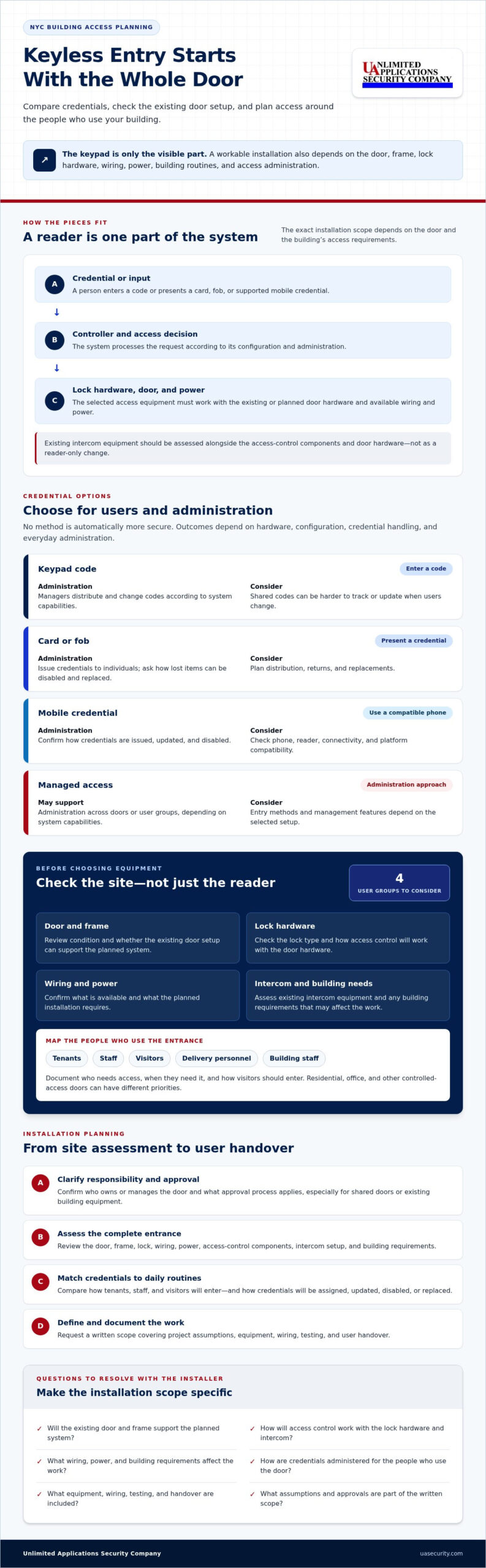
A clear plan turns a site assessment into a workable installation scope. Before selecting equipment, document who needs access, which doors are involved, and how the building handles visitors and credential changes. For keyless entry system installation NYC projects, confirm building approvals and applicable requirements with the responsible parties before work is scheduled.
What should you prepare before requesting an installation assessment?
Gather details that help the installer evaluate the whole entrance, not just the reader. Note each door location, approximate user groups, existing locks and intercoms, and any known access problems. Identify who will administer credentials and handle move-ins, staff changes, or lost cards, fobs, or devices. Ask building management about approvals, permitted work windows, and coordination procedures.
Then use a step-by-step process:
- 1. Define access needs. Record user groups, entry hours, visitor handling, and which doors need controlled access.
- 2. Document existing equipment. List locks, intercoms, wiring information if available, and recurring door or access issues.
- 3. Arrange a site assessment. Have the installer inspect the doors and related hardware, verify what can be reused, and identify wiring or power considerations.
- 4. Review the written scope. Confirm the proposed equipment, work areas, assumptions, testing plan, and any building coordination required before approving the project.
- 5. Install, test, and hand over. Confirm commissioning steps and make sure the people responsible for daily administration understand the system.
Select equipment after the assessment. A site review may reveal that the door, frame, wiring, or existing intercom affects the design. Ask the installer to explain how those findings shape the scope instead of choosing hardware from a product description alone.
What should happen during testing and handover?
Before considering the work complete, ask the installer to test authorized entry, denied access, door operation, and any relevant intercom or access-control integration. The person responsible for the building should receive clear instructions for routine administration, changing or disabling credentials, and reporting faults. Keep a record of installed components, available system documentation, and who handles future maintenance or troubleshooting.
Requirements and approval processes vary by property. Confirm the proposed work with the owner, manager, or board as applicable, and verify relevant building, fire, and accessibility considerations with the appropriate authorities. To discuss your property’s access-control setup and arrange an assessment if appropriate, contact Unlimited Applications Security Company.
Choose a Keyless Entry Installer in NYC and Define the Next Step
Choose an installer who can evaluate the complete entrance, not just recommend a reader. Experience with access control, door hardware, and intercom integration is relevant because the system must fit both the door and the way people use it. For keyless entry system installation NYC properties, request a written scope before approving equipment or work.
Questions to ask before approving an NYC installation
Use the discussion to check that the proposal addresses your building’s actual conditions. Ask:
- How does the proposed system work with the existing door, lock, frame, wiring, and expected traffic?
- Which credential methods and intercom or access-control integrations are included, and which capabilities still need confirmation?
- Who will issue, change, and disable credentials, and what ongoing administration is part of the scope?
- What assumptions have been made about existing equipment, wiring, power, or building access?
- Who coordinates approvals and work arrangements with building management, and what testing and handover are included?
- Who should be contacted about faults, future changes, or support for the installed hardware?
A clear scope identifies the proposed equipment, wiring work, testing process, and handover instructions. It should distinguish confirmed work from items that depend on inspection or approval. If the system will connect to an existing intercom, ask how the intended visitor and door-release workflow will be tested.
How Unlimited Applications Security Company can assess the project
Unlimited Applications Security Company works with access control systems, intercoms, electric strikes, and magnetic locks in New York City. Its work with physical security and door hardware can help inform an assessment of the entrance and how its components relate. Confirm directly which keyless credential technologies and integrations are available for your project before treating a specific option as part of the proposed work.
Prepare a list of the doors involved, current equipment, user groups, and access routines. Then discuss those requirements with the company to determine whether an assessment is appropriate. A careful review can clarify the scope before you select equipment or schedule installation.
Discuss your NYC entry requirements with Unlimited Applications Security Company to outline the property’s access-control and door-hardware needs.
Plan Your Next Step With Confidence
A successful keyless entry project starts with the property, not a preferred reader or credential. Compare access methods based on who will use them and how access will be managed. Then confirm that the existing door, locking hardware, wiring, and intercom can support the intended workflow. A site assessment and written scope help clarify what the installation involves before equipment is selected.
For keyless entry system installation NYC, coordinate with the building’s owner or management and verify applicable requirements for the property. Confirm which credentials, integrations, testing, and handover are included, and who will handle future access changes. These checks help align the system with everyday use and avoid preventable complications.
Unlimited Applications Security Company works with access control and specialized door hardware in New York City, as well as intercom systems that may be relevant to coordinated entry. Discuss your property’s doors, users, and entry routines to determine whether an assessment is the right next step. Discuss your NYC access-control installation and move forward with a clearer plan.
Frequently Asked Questions
What is included in a keyless entry system installation?
A keyless entry installation may include an entry device, credentials, a controller, compatible locking hardware, power, and required wiring. The exact scope depends on the door, existing equipment, and how access should be managed. For a building entrance, the assessment should also consider how visitors enter and whether an intercom needs to work with the access system. Ask for a written scope that identifies equipment, testing, and handover.
Can a keyless entry system be installed on an existing NYC apartment building door?
It may be possible, but compatibility needs to be established through an on-site assessment. The installer should inspect the door’s condition and operation, existing lock and frame, wiring, power, and entry traffic. For keyless entry system installation NYC apartment buildings, also confirm who controls the door and whether management or a board must approve the work. Don’t assume a reader will work with existing hardware without checking the complete setup.
Which is better for a building, a keypad or a key fob system?
Neither is automatically better. A keypad lets users enter a code, while a key fob is presented to a compatible reader. Compare how credentials are issued, changed, and disabled, and who will manage those tasks. Shared codes may be easy to distribute but harder to attribute to individuals; fobs require a process for replacements and returns. The right option depends on user routines, door equipment, and management capacity.
Does keyless entry work with an existing intercom system?
It can, but integration isn’t automatic. The installer needs to confirm whether the existing intercom and access-control equipment can support the intended sequence, such as a visitor calling a resident or staff member and the door being released after authorization. Older equipment, wiring, and lock hardware may affect the design. Describe the desired visitor workflow during the assessment, then ask which components will work together and how that operation will be tested.
How long does keyless entry installation take in NYC?
There isn’t one reliable duration for every NYC project. Timing depends on the number and condition of the doors, the lock hardware, wiring and power, existing intercom equipment, and any building coordination or approvals needed. Ask the installer to estimate the schedule after reviewing the property and defining the scope. Confirm whether the estimate includes testing, coordination with building management, and instructions for the people who will administer access.
What should I ask a keyless entry installer before hiring them?
Ask how the proposed system fits the door, user workflow, and existing equipment. Request a written scope listing assumptions, hardware, wiring work, credential methods, integrations, testing, and handover. Confirm who will administer credentials, what support is available for installed hardware, and how future changes or faults are handled. For a New York City building, clarify who is responsible for approvals and coordination, and verify applicable property requirements with the responsible parties.
Can keyless entry be integrated with an electric strike or magnetic lock?
It may be possible, but the hardware must suit the door and the proposed access-control setup. An electric strike and a magnetic lock are different approaches, so the installer should inspect the door, frame, existing lock, wiring, power, and intended operation before recommending either. Unlimited Applications Security Company works with access control systems and both types of door hardware in NYC. Confirm the proposed integration and relevant property requirements before proceeding.