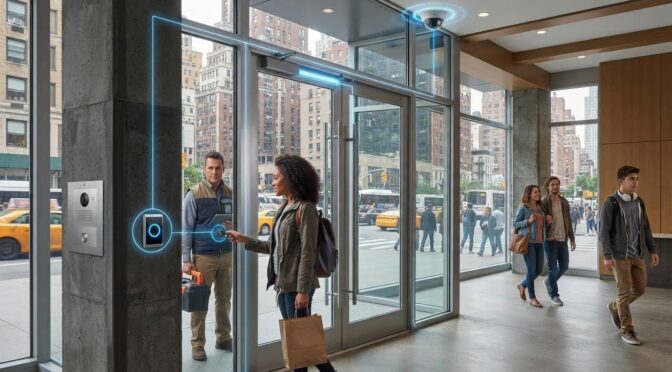
Adding more security devices can make a building entrance harder to manage, not safer. In NYC buildings, an intercom may identify a visitor while cameras, access control, and door hardware operate separately, leaving staff to piece together what happened. This is the practical challenge behind physical security integration NYC building teams need to address: coordinating components around one clear, verifiable entry workflow, not simply connecting every device.
It’s understandable to worry that existing equipment won’t work together or that installation in an occupied building could disrupt access. Compatibility depends on the specific systems and hardware, so begin with an assessment instead of assuming everything can be retained. Teams also need a plan for how residents, tenants, staff, and visitors will enter while work is underway.
This article explains how intercoms, CCTV cameras, access control, electric strikes, and magnetic locks can support coordinated entry and event review. It also outlines which workflows may benefit, what to check in existing equipment, and what NYC building teams should consider before discussing a project with a qualified local integrator.
Key Takeaways
- For physical security integration NYC projects, start by mapping how people enter and how staff respond to access events.
- Record each device’s manufacturer, approximate age, and known issues before assessing whether existing equipment can work together.
- Compare current entry procedures with the building’s needs before deciding whether to integrate, repair, or replace equipment.
- Plan discovery, documentation, testing, and handover in sequence, and agree on access contingencies with building management before work begins.
- Separate systems, recurring access problems, or planned upgrades can signal it’s time to consult an integrator. Prepare equipment details and workflow questions for the discussion.
What Physical Security Integration Means for NYC Buildings
Physical security integration means coordinating relevant devices around a building’s entry and response procedures. The goal is to make the steps clearer for staff, not simply to install more equipment. For example, at an apartment building entrance, a visitor calls a resident through an intercom, the resident identifies and authorizes them, and the entry door is released. A camera may provide a visual reference, while access control and door hardware manage entry. Whether these components can communicate or share information depends on the actual equipment and setup.
The term can also refer to software that brings separate security applications together. Physical Security Information Management (PSIM) describes a software category for integrating security devices and applications. That is different from cybersecurity software and network protection, which address digital threats. A building may use connected physical security equipment without buying cybersecurity software, and integrating hardware does not itself secure the network it uses.
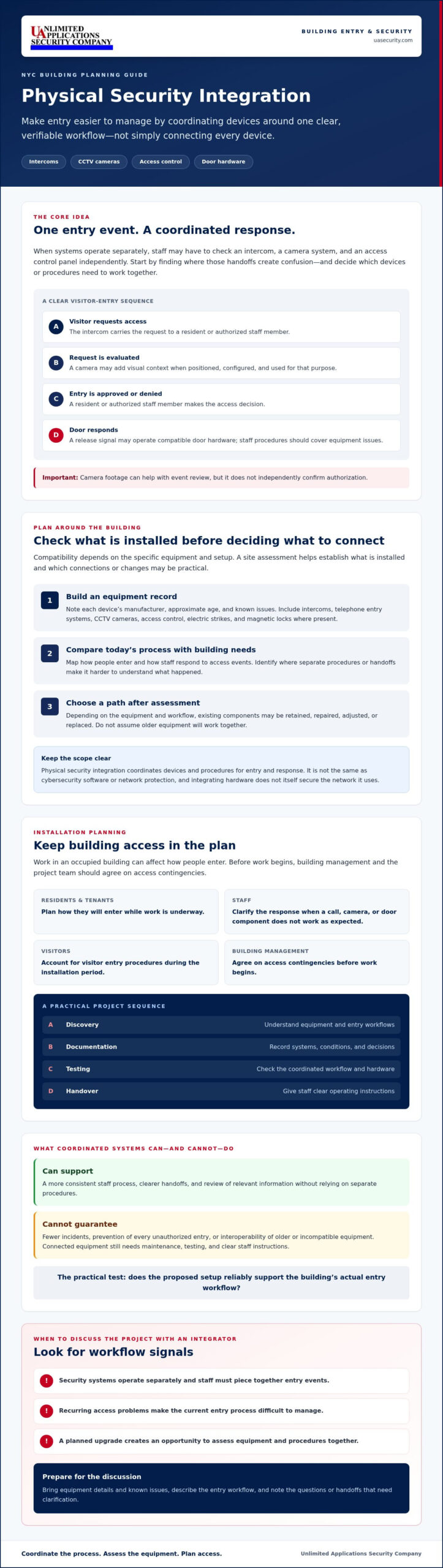
Without coordination, staff may need to check an intercom, a camera system, and a separate access control panel, then follow different procedures to understand an entry event. Physical security integration NYC planning starts by identifying where those handoffs create confusion and deciding which devices or steps need to work together.
Which physical security systems can be coordinated?
Relevant equipment may include intercoms, telephone entry systems, CCTV cameras, and electronic access control. Electric strikes or magnetic locks may form part of the door hardware used in an entry process. In a coordinated workflow, staff might use the intercom to handle a visitor call, refer to camera footage for context, and use access control to authorize entry.
That sequence is a planning example, not a promise that every system can connect. Capabilities depend on the equipment, wiring, configuration, and building. A site assessment helps establish what is installed and which connections or changes may be practical.
What integration can and cannot solve
Coordinated equipment can help staff follow a more consistent process and review relevant information without relying on separate procedures. It may also make it easier to spot where a handoff, such as confirming authorization before releasing a door, needs clarification. These workflow benefits don’t guarantee fewer incidents or prevent every unauthorized entry.
Integration also won’t automatically make older or incompatible equipment interoperable. Some existing hardware may be retained, while other components may need repair, adjustment, or replacement after assessment. Even connected equipment needs maintenance and testing, and staff need clear instructions for routine entry and equipment problems. The practical test is whether the proposed setup reliably supports the building’s actual workflow.
How Intercoms, Cameras, and Access Control Work Together
A coordinated entry process has distinct steps: a visitor requests access, a resident or authorized staff member evaluates the request, access is approved or denied, and the door responds accordingly. The process can be easier to manage when equipment and staff procedures support one another. As integrated safety and security strategies illustrate, communications, surveillance, and access control each have a role in a building’s security plan.
Integration means coordinating devices and procedures around a shared entry workflow, not simply connecting equipment. In a residential lobby, for example, a visitor might call a resident through an intercom. The resident can speak with the visitor and, with a video intercom, may be able to view them. If the resident authorizes entry, a release signal may operate compatible door hardware. Staff procedures should also clarify what to do if a call, camera, or door component doesn’t work as expected.
Follow the visitor-entry sequence
Each step has a practical purpose. The intercom carries the visitor’s request to the resident or staff member. A camera may add visual context if it’s positioned, configured, and used for that purpose. Footage can help staff review an event, but it doesn’t independently confirm authorization. Camera use should also follow applicable privacy requirements and building policies.
After approval, the system may send a signal to compatible door hardware. Whether that happens automatically or requires a separate step depends on the installed equipment and configuration. The intended result is a clear handoff: the person responsible for authorization knows what happens next, and staff understand how to respond if the door doesn’t release.
Understand the role of each component
An intercom supports communication and, in some systems, visitor identification. Access control manages authorization according to its configuration. Door hardware performs the physical action: an electric strike releases a latch, while a magnetic lock uses magnetic force to secure a door. These components serve different functions, and suitability depends on the door and installation. For a closer comparison, see this guide to electric strikes and magnetic locks.
Don’t assume every component will communicate with every other one. For physical security integration NYC planning, verify how the installed systems, wiring, and door hardware work together before choosing a workflow. A hands-on review of a building’s intercoms, CCTV, access control, and door hardware can help identify what needs attention. Learn about intercom and access control services as one possible next step.
How to Evaluate a Physical Security Integration Plan in NYC
A sound plan starts with the building’s current equipment and entry procedures, not a recommendation to replace everything. For physical security integration NYC projects, an inventory helps clarify what’s installed, what’s working, and where staff or residents encounter problems. It also gives an integrator a practical basis for assessing whether components can work together.
Start with the building and existing equipment
List each entrance, the people who use it, and how visitors are handled. Record the manufacturer and model, if available, for intercoms, CCTV cameras, access control, and door hardware. Note the approximate age and known issues, such as recurring faults or missing documentation. Flag equipment that needs professional inspection instead of assuming it can be reused.
Ask about compatibility, safety, and project scope
Compare the current workflow with the building’s actual needs. Ask which components will communicate, which will remain independent, and what work or changes each option involves. Confirm how door operation, fire egress, and any applicable NYC requirements will be reviewed by qualified professionals. Requirements depend on the building and project, so verify them rather than relying on a general assumption. For a related entry-planning resource, see this NYC keyless entry installation guide.
Use questions like these to compare proposals and identify what still needs clarification:
| Review area | Questions to ask |
|---|---|
| Compatibility | Which devices can communicate? Which will continue to operate separately? What has been verified on site? |
| User workflow | Who can authorize entry? What steps do residents, staff, and visitors follow at each entrance? |
| Maintenance | What equipment has recurring faults? How will components be tested and maintained after the work? |
| Project coordination | What areas or equipment will be affected? How will building management coordinate access and communicate changes? |
A useful assessment explains its findings in building-specific terms. If a proposal recommends replacement, ask which limitation or operating issue the change addresses. If it recommends integration, ask what connection has been confirmed and how the resulting workflow will be tested. This keeps the discussion focused on practical needs rather than broad promises.
Plan Integration Work Without Disrupting Building Access
In an occupied building, security work has to account for people who still need to enter and leave while equipment is being assessed or installed. A practical plan sets out the work sequence, identifies who is responsible for decisions, and agrees on what happens if an entrance or access method is temporarily unavailable. For physical security integration NYC projects, building management should review these arrangements with the integrator before work begins.
Use a clear planning and verification sequence
Start with a site survey of existing intercoms, cameras, access control, door hardware, cabling, entrances, and normal access requirements. Use the findings to document the proposed scope, which system interfaces have been verified, who is responsible for each task, and whether any approvals need to be confirmed. Building, fire, and electrical requirements can depend on the property and project. Refer applicable questions to qualified professionals and relevant authorities instead of assuming one set of requirements applies to every site.
Before handover, arrange to test the entry scenarios agreed on for the building. These might include a routine visitor call, an authorized door release, and the procedure staff should follow if a component isn’t working. Include relevant building representatives in the review so they can confirm that the documented process matches how the entrance is meant to operate. Record unresolved issues rather than treating them as completed work.
Keep residents and staff informed
Once the schedule is confirmed, building management should tell residents, staff, and affected service providers when an entrance or access method may be affected. Name a person responsible for sharing updates, and agree on a temporary access procedure before work starts. The procedure should be clear to the people who need to use it, not just the project team.
At handover, provide straightforward user instructions, maintenance contacts, and a record of outstanding items. This gives staff a reference after the installers have left and helps prevent confusion about whom to contact when a device needs attention. Keep the information accessible to the people responsible for building operations.
A coordinated assessment of intercoms, access control, and related door hardware can help building teams define a workable scope before scheduling installation or repair. Review intercom and access control services as a next step for discussing the equipment involved.
When to Consult a NYC Physical Security Integrator
Consider an assessment when intercoms, cameras, and door controls operate separately, staff have recurring trouble managing entry, or a building upgrade may affect existing security equipment. A qualified integrator can inspect how the systems function at the site and help define practical next steps. An assessment is not a commitment to replace every component.
An integration assessment checks what can work together in a specific building; it doesn’t promise universal compatibility. That distinction matters in older buildings, where equipment, wiring, documentation, and past repairs may vary from entrance to entrance.
What to prepare before requesting an assessment
Useful information makes the initial discussion more specific. Gather what’s available, even if some records are incomplete:
- Equipment records, photos, and manufacturer and model details for intercoms, CCTV, access control, and door hardware.
- A short description of the issue, including when it occurs and any recurring faults staff have noticed.
- A list of entrances, user groups, and important access scenarios, such as resident entry, visitor calls, or staff access.
- Any known repairs, missing manuals, or components that may need professional inspection.
Ask how the proposed scope will assess installation, repair needs, and the condition of existing hardware. Request an explanation of which components have been checked for compatibility and which findings still need verification. This helps building teams compare options without assuming that either integration or replacement is automatically the right answer.
How local hardware expertise can help
Unlimited Applications Security Company works in NYC with intercom systems, CCTV surveillance, access control, magnetic locks, and electric strikes. Its intercom experience includes Aiphone, Comelit, Siedle, Lee Dan, and Tektone equipment. This hands-on service scope can help building teams discuss the actual hardware involved, identify known operating issues, and understand which installation or repair questions belong in a site-specific review.
Before the discussion, be ready to explain what currently happens at each entrance and what you’d like staff or residents to be able to do. A clear description of the workflow keeps the assessment focused on building operations, not just equipment lists. For physical security integration NYC planning, contact Unlimited Applications Security Company to discuss a building-specific assessment of your intercom, CCTV, access control, or door hardware.
Make Your Building’s Entry Workflow Work Better
Effective physical security integration NYC planning starts with the building’s real entry needs. Intercoms, cameras, access control, and door hardware should support a clear workflow, with each component assessed for compatibility rather than assumed to work with the others. A site-specific review can help identify what may be retained, what needs repair, and where changes could improve day-to-day coordination.
Plan around people as well as equipment. Document current access procedures, agree on contingencies before work begins, and make sure staff know how to operate the systems after handover. These practical steps help building teams evaluate options without treating full replacement as the default.
Unlimited Applications Security Company provides NYC-focused installation and repair for physical security hardware, including CCTV, access control, magnetic locks, and electric strikes. Its intercom expertise covers Aiphone, Comelit, Siedle, Lee Dan, and Tektone systems. To discuss your building’s equipment and entry workflow, discuss your building’s physical security systems with a local specialist.
A clear assessment is a practical first step toward more coordinated building access.
Frequently Asked Questions
What does physical security integration mean?
Physical security integration means coordinating relevant building security devices and procedures around entry and response workflows. In an NYC apartment building, that might involve an intercom for visitor communication, access control for authorization, a camera for visual context, and door hardware that responds to an approved release. Integration doesn’t guarantee that every device can connect, and it isn’t the same as cybersecurity software or network protection.
Can an intercom system work with access control?
Yes, an intercom may work with access control as part of a coordinated entry process if the installed equipment and configuration support it. For example, a resident could respond to a visitor call and authorize entry, after which compatible door hardware may release. A qualified assessment should verify the intercom, access control, wiring, and door operation together. Don’t assume equipment will work together based only on its general category.
Do security cameras connect to access control systems?
Sometimes. Depending on the equipment and setup, CCTV footage may be coordinated with access-control events or reviewed separately to provide context about an entry. Camera footage doesn’t itself determine whether someone is authorized, and integration capabilities vary by system. Building teams should ask what information is actually shared, how staff will use it, and what privacy requirements and building policies apply to camera use.
Do I need to replace existing security equipment to integrate it?
Not necessarily. An assessment may find that some existing equipment can remain, while other components need repair, adjustment, or replacement. The answer depends on the specific devices, wiring, condition, configuration, and required workflow. Ask an integrator to explain what has been verified on site and why any proposed replacement is needed. Compatibility shouldn’t be assumed, but neither should full replacement be treated as automatic.
How do I plan physical security integration in a NYC building?
For physical security integration NYC planning, begin with an inventory of installed intercoms, cameras, access control, and door hardware, including known faults and available model information. Map entrances, user groups, and current access procedures, then identify the workflow the building needs. Discuss a site assessment, testing, and access contingencies with building management. NYC requirements depend on the building and project, so have applicable code and life-safety questions reviewed by qualified professionals.
Can electric strikes and magnetic locks be integrated with an intercom?
They may be coordinated with an intercom if the equipment, wiring, door, and configuration support the intended operation. An electric strike and a magnetic lock perform different door-securing functions, so they aren’t interchangeable by default. Have the existing hardware and door operation assessed before selecting an approach. A qualified professional should review applicable egress and life-safety considerations for the specific building and installation.
What information should I provide to a security integrator?
Share equipment records, photos, manufacturer and model details, and a concise description of known problems. List each entrance, the people who use it, and the access scenarios that matter, such as visitor calls or staff entry. Mention recurring faults, past repairs, and missing documentation. This gives an integrator useful context for a site-specific assessment of intercoms, CCTV, access control, and door hardware without assuming every component needs replacement.