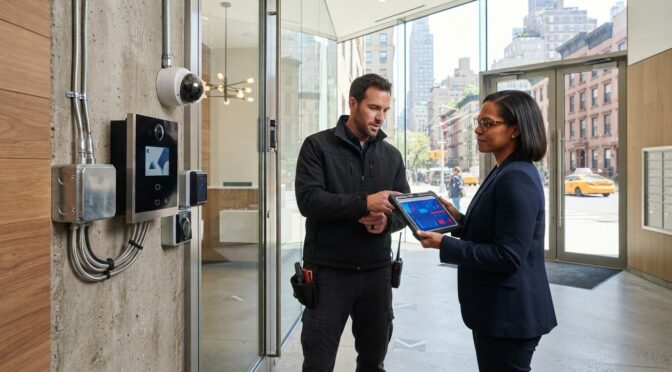
What if the biggest decision in an apartment building video intercom installation NYC project is not which system to choose, but whether the building is ready for the work? A practical review of entrances, existing equipment, wiring, door hardware, and resident needs can reveal what the project should address before installation planning begins. In an occupied New York City building, documenting those details helps management account for shared access and day-to-day use.
This checklist helps you map how residents and visitors use each entrance, inventory existing intercom equipment, and record issues with door-release hardware. It also gives property teams a way to organize resident feedback and identify questions that need technical review.
Use the checklist to establish a starting point, not to assume that every building needs a full replacement. Unlimited Applications Security Company installs and repairs video intercom systems and related entry hardware, including electric strikes and access control. Bring your documented observations to a conversation about the building’s intercom installation or repair needs.
Key Takeaways
- Map every shared entrance and note how residents, visitors, staff, and delivery workers use it.
- Inventory existing intercom equipment, visible wiring, door releases, and known system limitations before setting project scope.
- Compare video, audio, IP, and telephone entry approaches against documented building requirements and resident needs.
- Organize system records, access details, resident concerns, and priorities before apartment building video intercom installation NYC.
- Use site findings to guide system selection, installation planning, and testing, including any related door hardware work.
Why NYC Apartment Buildings Need a Video Intercom Security Assessment
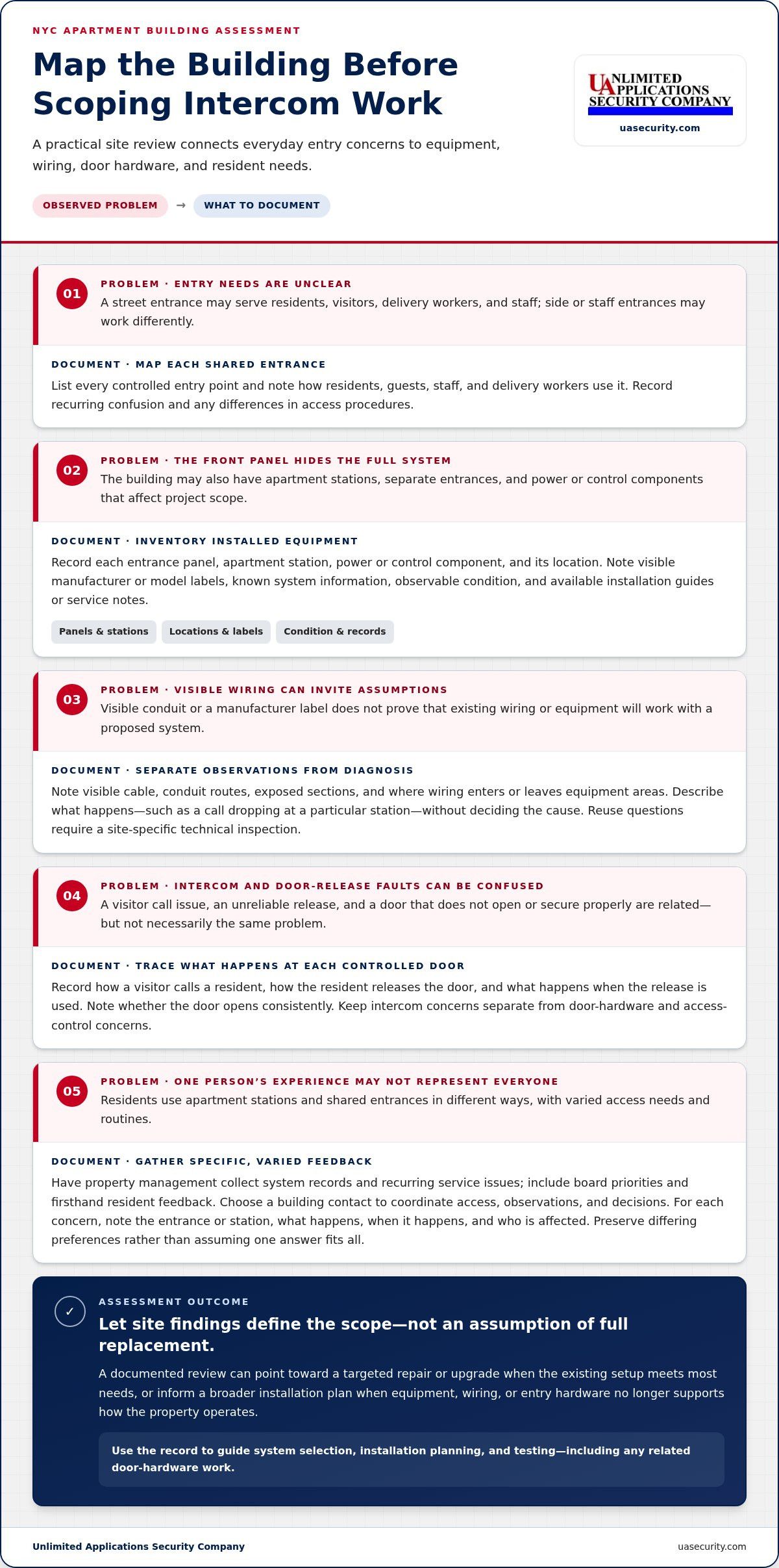
A video intercom upgrade involves more than selecting an entrance panel. The building’s entrances, existing equipment, door-release hardware, and resident access patterns all affect the work. In a New York City apartment building, a street entrance may serve residents, visitors, delivery workers, and staff, while a side or staff entrance may have different requirements. Reviewing each point of entry helps property teams define a realistic scope before planning an apartment building video intercom installation NYC.
An apartment-building security assessment reviews how people enter the building, what intercom and door systems are installed, and what the property needs from an upgrade. It connects everyday access concerns to the location and condition of the equipment. For a general introduction to the parts and functions of these systems, see this Intercom system overview.
The findings may point to a targeted repair or upgrade if the existing setup meets most of the building’s needs. If equipment, wiring, or entry hardware no longer supports how the property operates, the findings can inform a broader installation plan. Document conditions before deciding which approach fits.
Which NYC building conditions should prompt an assessment?
Repeated call failures, an unreliable door release, aging equipment, or confusion about how visitors should be admitted are practical reasons to review the system. Changes in occupancy, delivery activity, or access procedures can also make an existing setup less suitable. Record what happens, where it happens, and who is affected. Then separate intercom problems from concerns involving door hardware or access control.
- Intercom: Note problems with visitor calls, apartment stations, or communication between the entrance and apartments.
- Door hardware: Record problems with releasing, opening, or securing the door separately from intercom issues.
- Access procedures: Describe how residents, guests, staff, and delivery workers enter, including any recurring points of confusion.
This distinction matters because replacing an intercom panel alone may not resolve a door-release or access-control problem. For properties looking to coordinate building entry with broader security infrastructure, systems like Digital-Vision.AI illustrate how access-control and video surveillance can work together. A written assessment helps identify these connected needs before the project scope is set.
Who should contribute to the building’s assessment?
Property management can gather system records and describe recurring service issues. Board representatives can identify priorities and coordinate decisions. Residents can share firsthand feedback because they use apartment stations and shared entrances in different ways. Include people with varied access needs and routines rather than assuming one person’s experience represents the whole building.
Choose a building contact to coordinate access, collect observations, and track decisions. Keep feedback specific: identify the entrance or station, describe what happens, and note when the problem occurs. Record differing preferences rather than reducing them to a single assumption. A shared record gives the intercom team a clearer picture of the building’s needs.
Assess Existing Video Intercom Equipment, Wiring, and Entry Hardware
Before planning an upgrade, inventory what is installed and how each entry point works. A building may have a street-level entrance panel, apartment stations, a separate staff entrance, and door-release hardware connected to the intercom. Record each component’s location and visible condition so the project scope reflects the full entry system, not just the equipment at the front door.
Whether existing equipment or wiring can be reused depends on a site-specific inspection. Visible conduit or a manufacturer label can inform the review, but neither proves that a component will work with a proposed system. For broader project context, consult this professional intercom installation guide.
What should the equipment and wiring inventory include?
Walk through each controlled entrance and note the panel, apartment stations, and any separate control equipment. Record visible manufacturer and model labels, along with the known system type and component locations. Describe observable problems, such as a cracked panel, a missing station, or intermittent calls. Do not diagnose faults inside concealed wiring or equipment; leave those questions for technical inspection.
- Equipment: List entrance panels, apartment stations, power or control components, and their locations.
- Wiring: Note visible cable, conduit routes, exposed sections, and where wiring enters or leaves equipment areas.
- Records: Gather available installation guides, service notes, and system information.
- Limitations: Describe known problems, including the affected entrance or stations and what residents observe.
Separate observations from assumptions. For example, record that a call drops at a particular station instead of concluding that a wire is damaged. This gives a technician a useful starting point while leaving the cause open for diagnosis.
How do doors and release hardware affect the assessment?
An intercom and its entrance hardware work together when a visitor requests access. At each controlled door, document how the visitor calls a resident, how the resident releases the door, and what happens when the release is used. Note whether the door opens consistently and closes as expected. Record recurring concerns without drawing conclusions about requirements or proposing hardware changes before inspection.
- Identify visible electric strikes, magnetic locks, and release controls.
- Note which entrance and intercom functions connect to each release.
- Record door behavior and reported difficulties, including when they occur.
These details help distinguish an intercom problem from a release or door-hardware concern. Unlimited Applications Security Company installs and repairs video intercoms and related entry hardware, including electric strikes and magnetic locks. For an organized discussion of your building’s intercom and entry hardware, gather the inventory and notes about observed issues.
Compare Video Intercom Options Against Building and Resident Needs
Once the current setup and building priorities are documented, compare system approaches against those findings. Video, audio, IP, and telephone entry can support different communication and access workflows, but no format is automatically right for every property. Consider how visitors contact residents, what residents need to know before releasing a door, and how management handles access questions. For apartment building video intercom installation NYC, match the system to documented needs instead of choosing features first and shaping the project around them.
Which system characteristics matter to a multi-tenant building?
Start with requirements that affect everyday use: entrance coverage, communication with apartments, visitor identification, and access management. Separate essential requirements from preferences. For example, residents may need to see a visitor before releasing the entrance, while management may need a clear process for handling access concerns. Record these separately so resident convenience and building operations both inform the comparison.
| Criteria | Building question | Assessment finding |
|---|---|---|
| Video communication | Do residents need visual information before deciding whether to release the door? | Record where video is needed and which residents or entrances it should serve. |
| Audio communication | Would two-way voice communication address the building’s visitor-entry needs? | Note where audio communication is required and any current call issues. |
| IP approach | Does the building want an IP-based system considered alongside existing infrastructure and management workflow? | List network-related project questions for technical review. Do not assume existing connections are suitable. |
| Telephone entry | How do residents currently receive visitor calls, and should that workflow remain part of the comparison? | Document current call routing and resident access preferences. |
| Management workflow | Who handles access concerns and coordinates system information? | Identify the decision-maker and the records or procedures they need to manage. |
Use the findings to rank requirements rather than creating an unprioritized wish list. A feature that matters at one entrance may not be needed at every door. Resident preferences can also differ, so note which needs are shared and where they vary before comparing proposed approaches.
How should buildings assess system and brand compatibility?
Record visible manufacturer and model labels for installed panels, stations, and related components. A known brand is useful reference information, but it does not establish that existing equipment can be retained. Reuse depends on the condition of the system, the components involved, and the requirements of the planned work. Keep those decisions open until the equipment and connections are assessed.
If the inventory points to intermittent calls or other faults, troubleshooting can help determine whether repair or replacement is appropriate. Unlimited Applications Security Company works with Aiphone, Comelit, Siedle, Lee Dan, and Tektone intercom systems. Findings that indicate a fault can inform intercom repair in NYC without assuming a full system change is necessary.
Use This NYC Apartment Building Assessment Checklist Before Approving Work
A written assessment gives managers and decision-makers a shared reference before they approve intercom work. Organize findings by entrance and, where relevant, by the apartment stations or areas affected. This makes it easier to distinguish a problem at one door from a need that may affect the wider building, and to discuss a practical scope for apartment building video intercom installation NYC.
What should a building document before a site review?
Gather the information that is readily available, but do not let a missing drawing or service record prevent a review. A clear list of current conditions, reported issues, and resident priorities can help focus the discussion. Keep observed facts separate from assumptions, and identify who can coordinate access to shared areas and equipment.
- Map the entrances. List each public, resident, staff, or other controlled entrance. Note how people use it and whether it has an intercom or door-release control.
- Record basic building details. Note the apartment count, the locations of relevant stations, and any areas or groups of apartments affected by reported problems.
- Inventory visible equipment. Identify entrance panels, apartment stations, release controls, and visible door hardware. Record manufacturer or model labels when available.
- Describe operating issues. State what happens, where it happens, and who has reported it. For example, note that calls fail at a particular station instead of assuming a wiring fault.
- Gather available records. Collect system information, building plans, installation documents, and prior service records. Note missing records without delaying the review.
- Summarize resident and management priorities. Record communication needs, access concerns, and the preferred way to manage visitor entry. Note where needs differ.
- Rank the work. Separate current operational problems from desired improvements and optional features. This keeps immediate needs from getting lost in a broader wish list.
- Prepare questions and next steps. List items for technical review, including wiring, door hardware, system testing, and how residents will be informed about changes.
How should a building turn findings into a project scope?
Use the checklist to prepare a concise project brief: what needs attention, which entrances or apartments are affected, what the building wants to improve, and what still needs inspection. Keep CCTV planning separate from intercom decisions when it falls outside the entry-system scope. Similarly, if your property manages vehicle access points or parking areas alongside pedestrian doors, external perimeter equipment from specialists like Bollard Secure should be planned as part of a dedicated barrier strategy.
With the entrances, records, and priorities organized, you can move from preliminary notes to a focused project discussion. Discuss your building’s intercom installation needs with Unlimited Applications Security Company.
Plan the Next Step for Apartment Building Video Intercom Installation in NYC
An assessment is a decision point, not a commitment to replace every component. Its findings should connect observed building conditions to a practical plan: which entrances need attention, whether apartment stations or wiring require further review, and how door hardware affects the work. For apartment building video intercom installation NYC, a site-specific review helps define installation scope and testing priorities before work is approved.
What should decision-makers expect from a project-specific review?
A useful review turns the building’s notes into clear recommendations. It should distinguish a system-wide concern from an issue affecting one entrance or a group of stations, and identify where the intercom, wiring, or release hardware needs attention. This helps decision-makers understand what work is proposed and why, rather than treating every reported issue as proof that the entire system needs replacement.
Plan testing around the functions included in the project. Depending on the work, that may involve checking communication between an entrance and apartment stations, confirming door-release operation, and reviewing each affected entrance. After installation, residents and management should understand how to use the changed system and where to direct operational questions.
Unlimited Applications Security Company installs and repairs video intercoms and telephone entry systems, and works with related door hardware such as electric strikes and magnetic locks. Its work with Aiphone, Comelit, Siedle, Lee Dan, and Tektone systems supports consideration of existing equipment alongside the building’s entry needs. Recommendations can focus on repair, a targeted upgrade, or a broader installation plan based on site findings.
How can NYC property teams move from assessment to action?
Share the organized checklist, available system records, and ranked priorities with the security installation team. Identify the building representative who can coordinate access to entrances and relevant equipment areas, and include management or board members involved in scope decisions. This preparation keeps the discussion focused on the property’s actual conditions and outstanding questions.
Before approving work, make sure the proposed scope explains which entrances and components are included, what functions will be tested, and how the completed work will be communicated to residents. If site findings change the initial assumptions, update the priorities and scope. The goal is a plan that addresses documented needs without adding unnecessary work.
Discuss your building’s findings and next steps with Unlimited Applications Security Company’s NYC intercom team.
Turn Your Assessment Into a Clear Project Decision
A building assessment is most useful when it leads to a decision residents and management can act on. Before moving ahead with apartment building video intercom installation NYC, agree on the problems the project must resolve, the entrances it affects, and how the building will judge whether the work is complete. This gives the installation plan a clear purpose and keeps optional improvements distinct from essential work.
Bring your assessment notes and available system records to a discussion about the building’s needs. Unlimited Applications Security Company installs and repairs intercom systems and related entry hardware, including access control. A clear record of the property’s conditions helps shape a scope around its actual entry needs.
Discuss your NYC apartment building’s intercom installation or repair needs with Unlimited Applications Security Company.
Frequently Asked Questions
What is included in an apartment building video intercom assessment?
An assessment reviews the building’s entry setup and identifies what needs repair, closer inspection, or consideration in a proposed upgrade. It can include entrance equipment, apartment communication points, visible wiring, door-release operation, and reported access problems. A useful outcome is a set of observations tied to specific locations, allowing management to distinguish known conditions from questions that need technical diagnosis before defining the work.
Can an existing apartment intercom system be upgraded instead of replaced?
Yes. An existing system may be a candidate for an upgrade, but its condition and compatibility with the project need to be assessed first. A technician can investigate whether a reported problem is limited to one component or affects broader system operation. For example, if calls fail at one apartment station while other functions work, troubleshooting can help determine whether a targeted repair is appropriate instead of assuming a full replacement is needed.
What should a condo or co-op board prepare before an intercom assessment?
A board can name a building contact, gather available system documents, and list issues residents have reported. Clarify who can approve scope decisions and coordinate access to relevant building areas. If residents describe different needs, record them separately rather than reducing them to a single preference. Missing plans or service records do not need to hold up a review.
Does a video intercom assessment include door access hardware?
It can include a review of door access hardware connected to the intercom’s release function. For example, a technician may consider an electric strike or magnetic lock alongside how a resident’s release command affects the entrance. This helps identify whether an access issue appears related to communication equipment, door hardware, or both. The assessment records observed behavior; it does not replace a separate evaluation of requirements that may apply to the door.
Do all apartments need indoor video monitors in a building intercom project?
Not necessarily. The equipment plan should reflect the system design, how residents need to communicate with visitors, and the building’s documented priorities. Decision-makers can determine whether visual identification is needed across the property and consider other communication requirements. Avoid assuming every apartment must receive identical equipment before reviewing the existing setup and project requirements.
How does an assessment help plan a video intercom installation in NYC?
An assessment translates building conditions into a project scope: which locations need work, what existing components require further review, and what functions should be tested after installation. For apartment building video intercom installation NYC, this helps property teams plan around actual site needs instead of guessing at the work. It also gives management a clearer basis for coordinating access, communicating with residents, and reviewing project priorities.