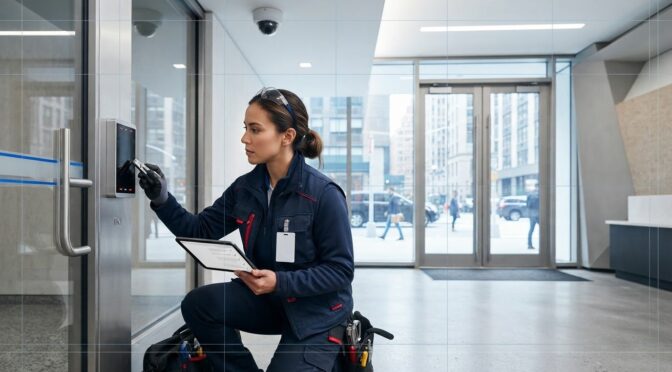
A door can appear secure while a worn strike, loose connection, or failing reader is already disrupting entry. For building teams, access control system maintenance NYC means checking the full entry point, not just the device residents tap or scan. A fault may stem from the reader, lock, wiring, or controller. In a shared entrance, tracking repeat symptoms can help identify a problem before access is interrupted.
Routine checks won’t prevent every breakdown, but they can reveal wear and help confirm that doors respond as intended. If you’re responsible for a residential or commercial building, a consistent inspection process makes it easier to review multiple access points and determine when a technician should investigate.
This checklist covers readers, credentials, door hardware, wiring, and controllers, plus the functions to verify during a maintenance visit. It also explains how documenting symptoms can help narrow down a fault across connected entry systems, including intercoms and access control.
Key Takeaways
- Routine access control system maintenance NYC helps property teams catch wear across entry devices and door hardware before it causes a larger disruption.
- Check readers, credentials, controllers, wiring, and locks together to help pinpoint where an access problem begins.
- Repeated failures, doors that don’t secure, or inconsistent release behavior are signs to document and investigate rather than repeatedly reset equipment.
- Record the affected entrance, symptoms, and timing so a technician can diagnose the issue more efficiently.
- A thorough service visit should include testing operation after inspection and repair, including connected intercom and door hardware where relevant.
Why Access Control System Maintenance Matters in NYC Buildings
Access control maintenance means inspecting and testing the devices that authorize entry, along with the door hardware they operate. A reader can accept a credential while a worn electric strike, magnetic lock, loose connection, or misaligned door prevents the entrance from working as intended. A system that looks operational at a glance has not necessarily been tested at every door with the credentials people use.
That distinction matters in NYC apartment buildings, co-ops, condominiums, and commercial properties. A malfunction at a lobby entrance can delay residents and staff, complicate deliveries, or leave visitors waiting. Understanding the basics of Access control helps explain why both credential devices and physical entry points need attention.
For a visual overview of access-control systems and their components, watch this video:
Which NYC building entry points need regular attention?
Include lobby doors, secondary entrances, staff doors, and every other controlled access point in the inspection. Shared entrances often see heavy use and varied entry patterns, from residents presenting fobs to visitors using an intercom. In a multi-tenant building, log the entrance, reported symptom, and time it occurred. If complaints recur at the same door or appear across several doors, the record can help reveal a pattern.
What preventive maintenance can and cannot do
Inspection and testing can reveal visible wear, loose connections, and inconsistent operation before they become larger access problems. A technician can assess the reader, controller, wiring, and connected lock as parts of one entry system, then test operation after repair. Maintenance cannot prevent every component failure or power interruption. It helps identify and address issues, but it is not a guarantee against disruption.
Access control system maintenance NYC focuses on physical security hardware, including electronic access devices, electric strikes, magnetic locks, and related intercom equipment. It is distinct from cybersecurity software services. Keeping a clear record of symptoms and checking the full door assembly gives building teams a practical starting point when entry becomes unreliable.
What a Professional Access Control Maintenance Check Should Inspect
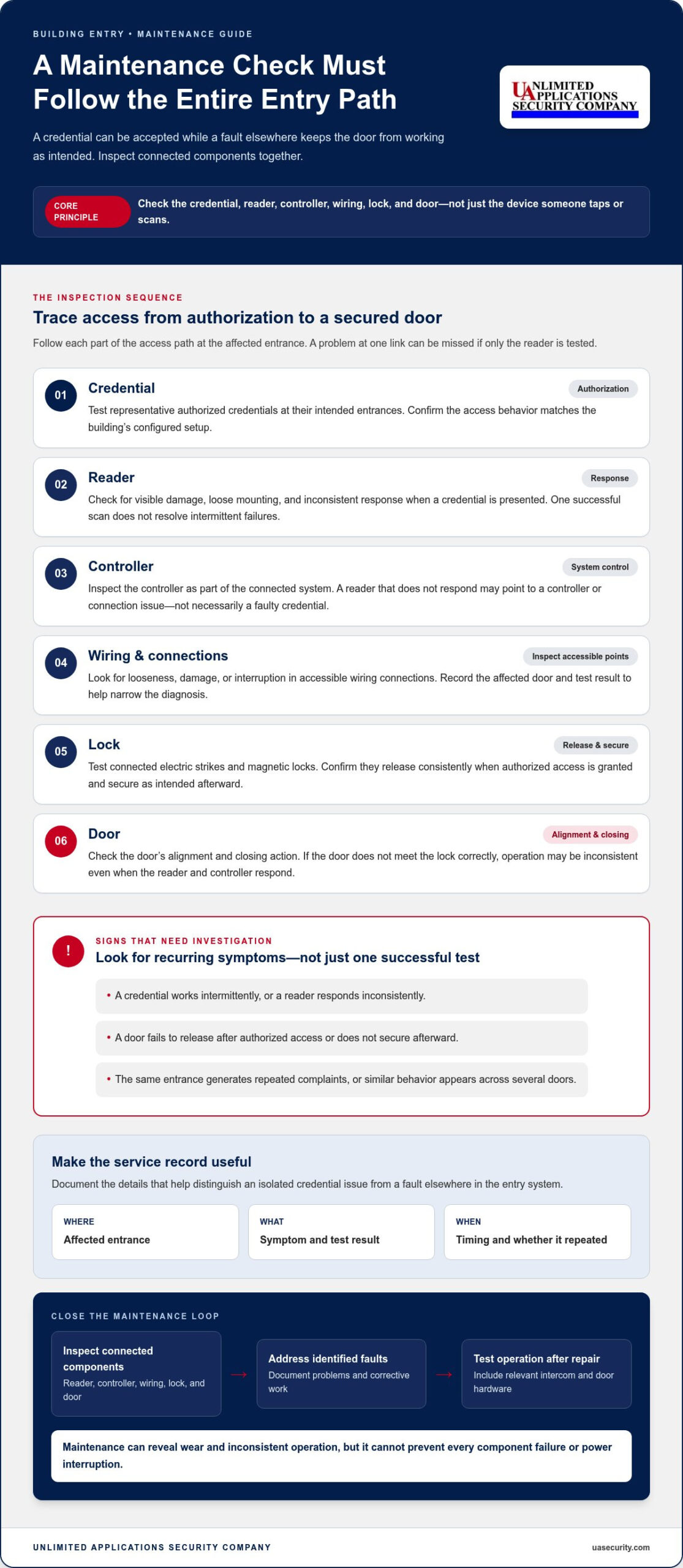
A useful maintenance check follows the full access path: credential, reader, controller, wiring, lock, and door. If a credential is accepted but the door does not release, testing only the reader can miss the fault. A technician can inspect the connected components, test the system at the affected access points, and document problems and corrective work.
The scope is practical, not just visual. UL Solutions describes UL 294, the Standard for Access Control System Units. A maintenance inspection is not a product certification. It assesses the installed system’s condition and operation and identifies faults that need attention.
Readers, credentials, controllers, and connections
Start at the reader. Check for visible damage, loose mounting, and inconsistent response when a credential is presented. Test representative authorized credentials at their intended entrances and confirm that access behavior matches the building’s configured setup. One successful scan does not resolve a report of intermittent failures.
Next, inspect the controller and accessible wiring connections for looseness, damage, or interruption. A reader that does not respond could indicate a connection or controller issue, not necessarily a faulty credential. Record the affected door and test result to help narrow the diagnosis.
Locks, door alignment, and release operation
Test connected door hardware as part of the same check. Confirm that electric strikes and magnetic locks release consistently when authorized access is granted and secure as intended afterward. Check the door’s alignment and closing action, too. A door that does not meet the lock correctly may behave inconsistently even when the reader and controller respond.
Record intermittent behavior clearly. Note which entrance was tested, what happened, and whether the fault repeated. One successful release does not establish reliable operation if the door has failed at other times.
Access control system maintenance NYC should leave building teams with a clear account of what was inspected, what did not operate as expected, and what corrective work was performed. Because access systems can share an entry environment with intercoms and door hardware, inspecting the physical components together can help identify where they interact. For an overview of access control service in NYC, review the available service information.
How to Spot Access Control Problems Before They Disrupt Entry
A single failed credential may be a user-specific issue. The same symptom reported by several people, or repeated at multiple connected entrances, points to a broader fault that needs technical diagnosis. Track which door is affected, what happens during an access attempt, and whether the problem repeats. This record helps distinguish an isolated credential problem from a reader, wiring, controller, lock, or power issue.
Warning signs that call for technical diagnosis
Look for recurring symptoms rather than relying on a single successful test. Log reports such as:
- A credential works intermittently, or a reader responds inconsistently.
- A door fails to release after authorized access or does not secure afterward.
- The same entrance generates repeated complaints, or similar behavior appears at several connected access points.
Prioritize doors that remain unsecured, fail to release, or behave differently from one attempt to the next. Avoid using repeated resets as a substitute for diagnosis. A brief record of the time, location, credential type, and observed response can help a technician reproduce the issue and trace it through the entry hardware.
Separate access control faults from related entry-system issues
Compare what each component is doing without assuming a cause. If the reader does not respond, the fault may involve the reader or its connection. If the credential is accepted but the door does not open, the lock, door alignment, or control path may be involved. If a visitor can call a resident but the door does not release, the intercom may be working while the access control or door hardware is not.
Intercom symptoms can overlap with access complaints because both systems may serve the same entrance. A technician can assess the affected components together rather than treating a working call button as proof that the entire entry system works. For issues involving both systems, see professional intercom repair in NYC. The NYC intercom installation guide also explains how intercom equipment fits into a connected building entry setup.
Consistent reporting gives access control maintenance a useful starting point. Repeated failures, unsecured doors, and inconsistent releases can be investigated before they become a wider entry disruption.
NYC Access Control Maintenance Checklist for Property Teams
Useful maintenance records turn scattered complaints into diagnostic information. For access control system maintenance in NYC, property teams can document what users experience without trying to troubleshoot electrical hardware themselves. Repeated reports matter: resetting equipment may temporarily change a symptom, but it will not identify the cause.
Before a technician visit
Gather factual details for each affected entrance. Include:
- Location: identify the lobby door, secondary entrance, staff door, or other access point.
- Observed behavior: note whether the reader responds, a credential is accepted, and the door releases or secures.
- Pattern: record when the fault occurs and whether it affects one user, multiple users, or several entrances.
- Visible indicators: describe any reader or controller lights, sounds, or visible damage without opening equipment.
- Credential type: note whether the report concerns a fob, card, or another credential used at that door.
Keep the report specific. Do not open enclosures, change wiring, or adjust security hardware. Those actions can complicate diagnosis and may create additional problems. Preserve the symptom as observed and share useful details with the technician.
After inspection or repair
Add the technician’s findings to the building’s maintenance record. Note the diagnosed issue, corrective work completed, and any remaining operational limitation. This creates a reference for future reports and helps staff distinguish a recurring fault from a new one.
Before considering the issue resolved, verify representative authorized credentials at the affected entrance and observe the door’s release and securing behavior. Record the results and share relevant findings with staff who manage building entry. A consistent handoff helps prevent details from being lost between building management, front-desk staff, and maintenance personnel.
A simple log can include the date, entrance, reported symptom, affected users or credentials, technician findings, work performed, and post-service test result. Review it for repeat issues across doors. A pattern can help focus the next inspection and make service visits more useful.
For details about access control service in NYC, review the service information.
Restore Reliable Building Entry with Access Control Service in NYC
Reliable entry depends on more than a reader accepting a credential. The control equipment, wiring, lock, and door must work together. A practical service process moves from reported symptoms to inspection, diagnosis, repair, and testing at the affected entrance. This helps building teams understand what failed and whether operation has been restored.
What to expect from a methodical maintenance visit
Start with the reported problem and the specific doors involved. A technician can test the relevant access control devices and connected door hardware to help isolate the fault. If a reader responds but the door does not release, for example, the inspection should consider the lock and door interaction as well as the credential device.
Findings should guide the repair recommendation. A worn or loose component may call for a focused correction rather than replacement of the entire system. After corrective work, test the affected access points to verify that authorized entry and door operation are functioning as intended. Documenting any unresolved limitation gives property staff a clear basis for follow-up.
Unlimited Applications Security Company provides access control service and works on related physical security hardware in NYC. Depending on the entrance setup, the work can include magnetic locks, electric strikes, or intercom systems alongside access control equipment. These devices serve different functions, but issues can converge at the same doorway, so it helps to assess how the relevant hardware operates together.
Some buildings also coordinate access with other physical security measures, such as professional guard services from Regal Security to protect corporate and residential properties. For planning considerations that extend to camera coverage, see this NYC CCTV planning guide.
When to arrange professional access control service
Arrange a technical assessment when access failures recur, locks behave inconsistently, or a door does not secure as expected. A one-time symptom may be difficult to trace, but repeated reports tied to the same entrance give the technician useful diagnostic context. Building managers can make the assessment more focused by sharing the affected locations, observed behavior, and whether the issue impacts one user or several.
For access control system maintenance NYC, a clear service path connects inspection to diagnosis, practical repair, and operational verification. If your building has recurring entry problems, contact Unlimited Applications Security Company about access control maintenance and share the affected entry points and symptoms.
Keep Building Entry Dependable with a Clear Maintenance Plan
Reliable building access depends on more than a reader lighting up. Regular inspections should assess credentials, controllers, wiring, locks, and door operation, while property teams record recurring symptoms and affected entrances. If a door fails to release or secure consistently, a methodical diagnosis can help identify the fault and verify the repair.
Access control system maintenance NYC also benefits from checking connected physical entry hardware. Unlimited Applications Security Company works with access control systems, magnetic locks, electric strikes, and intercom equipment. Keeping maintenance records current and sharing clear observations when an issue repeats gives a service visit a practical starting point and helps building staff understand what was inspected and corrected.
For support with your building’s entry system, contact Unlimited Applications Security Company about access control maintenance in NYC. A consistent checklist and careful follow-through can help keep everyday entry functioning with greater confidence.
Frequently Asked Questions
How often should an access control system be maintained?
Set a routine inspection schedule based on how heavily each entrance is used, the equipment’s condition, and its maintenance guidance. A busy NYC lobby may need closer attention than a rarely used staff entrance. Also arrange an inspection when users report recurring faults or after work affects the entry hardware. Keep dates, findings, and corrective work in a building record so staff can track patterns and plan follow-up.
What does access control system maintenance include?
Access control system maintenance includes inspecting and testing the reader, authorized credentials, controller, wiring, connected lock, and door operation. The check should confirm that credentials grant access at intended entrances and that doors release and secure as expected. If a fault appears, the technician can assess related components, identify likely causes, perform appropriate repairs, and test the affected entry points again. Documenting findings helps building teams track the work.
What are the signs that an access control system needs service?
Arrange service when credentials work inconsistently, readers fail to respond, or doors do not release or secure reliably. Repeated reports from different users at the same entrance suggest the issue may be more than an individual credential problem. Similar symptoms at multiple doors can point to a shared system fault. Record the affected locations, what happened, and when, then share those observations to help guide diagnosis.
Can access control maintenance prevent system failures?
Maintenance can help identify visible wear, loose connections, and inconsistent operation before they develop into a larger access disruption, but it cannot prevent every component failure or power interruption. In NYC buildings, regular inspection and clear reporting give property teams a practical way to monitor entry hardware. Testing after corrective work can confirm how the affected doors operate, while maintenance records help identify recurring symptoms that warrant further diagnosis.
What happens if an electric strike or magnetic lock stops working?
If an electric strike or magnetic lock stops working, the door may fail to release or may not secure as expected. Report the affected entrance and the observed behavior, and avoid forcing the door or altering the hardware. A technician can assess the lock alongside the reader, controller, wiring, and door alignment to locate the fault. After corrective work, test the affected access point to verify operation.
Can an intercom problem affect access control?
Yes. A fault can affect the same entry experience even when the intercom and access control perform separate functions. For example, a visitor may be able to call a resident but the door may not release when access is granted. Conversely, a working credential reader does not confirm that the intercom is functioning. In NYC buildings where systems share an entrance, assess the reported symptoms across the relevant devices and door hardware.
Should access control be replaced if it has recurring faults?
Not necessarily. Recurring faults call for diagnosis, but they do not automatically mean the entire system needs replacement. The cause could be a reader, connection, controller, electric strike, magnetic lock, or door interaction. A technician can inspect the affected components, recommend practical corrective work, and verify operation afterward. If the issue persists, documented findings can help clarify whether a broader repair or replacement is appropriate for the building.