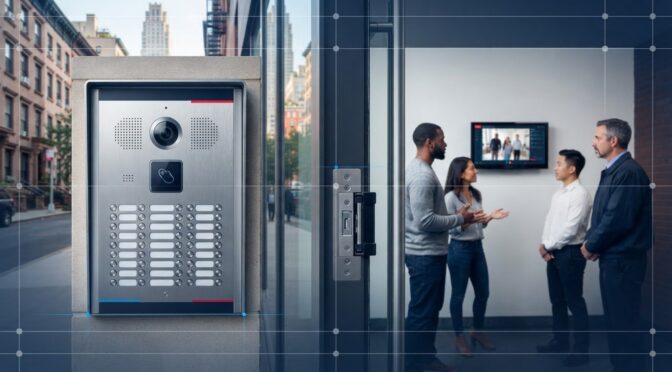
What if an intercom upgrade fixes the front-door panel but residents still can’t answer calls, or the door hardware won’t release the entrance? A multi tenant intercom system NYC apartment buildings rely on must support the entire entry process, from a visitor’s call to the resident’s response and the door’s operation.
A shared system can seem simple, but residents, visitors, and building staff may have different needs. Existing wiring, resident devices, and electric strikes can also limit which upgrades will work. Replacing everything isn’t automatically necessary, but the system’s components must work together.
This guide explains how the entrance panel, in-unit phones or monitors, mobile options, and door hardware fit into a typical entry workflow. It also covers what to check before choosing or upgrading equipment, including building size, wiring condition, resident preferences, and access-control needs. Use these points to prepare questions for an NYC intercom professional and compare practical options for installation, repair, and integration.
Key Takeaways
- A multi tenant intercom system NYC buildings rely on should support the full visitor-entry workflow, from calling a resident to releasing the entrance door.
- Check how the entry panel, resident stations or phones, communications path, and door hardware work together before choosing an upgrade.
- Compare audio, video, and telephone entry options against resident preferences, entrance conditions, and how the system will be used.
- Plan installation around existing wiring, affected areas, and clear communication with residents. An onsite assessment can help clarify the scope.
- Track intercom symptoms and check call quality, directory details, and door release to help identify developing problems.
What a Multi-Tenant Intercom System Does for an NYC Building
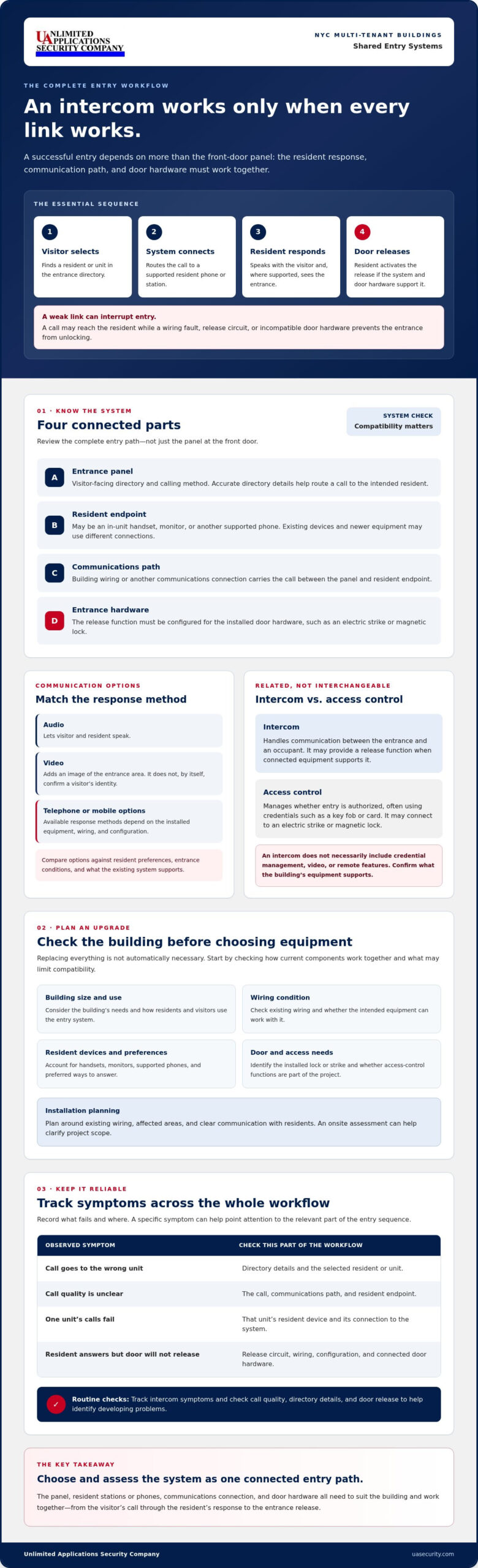
A multi-tenant intercom system is shared entry equipment that lets visitors contact residents in a building with multiple units. A visitor selects a name or apartment on the entrance panel, the system routes the call to the resident’s station or phone, and the resident responds. If the equipment and door hardware support it, the resident can activate a release to unlock the entrance.
Each link in that sequence matters. An outdated directory can send a call to the wrong unit. A resident may answer but be unable to release the door if the wiring or connected hardware isn’t working properly. Property owners evaluating a multi tenant intercom system NYC buildings can use should review the complete entry workflow, not just the panel at the front door. For a general overview of how an intercom system supports communication and may connect to a door latch, see Wikipedia’s explanation of intercoms.
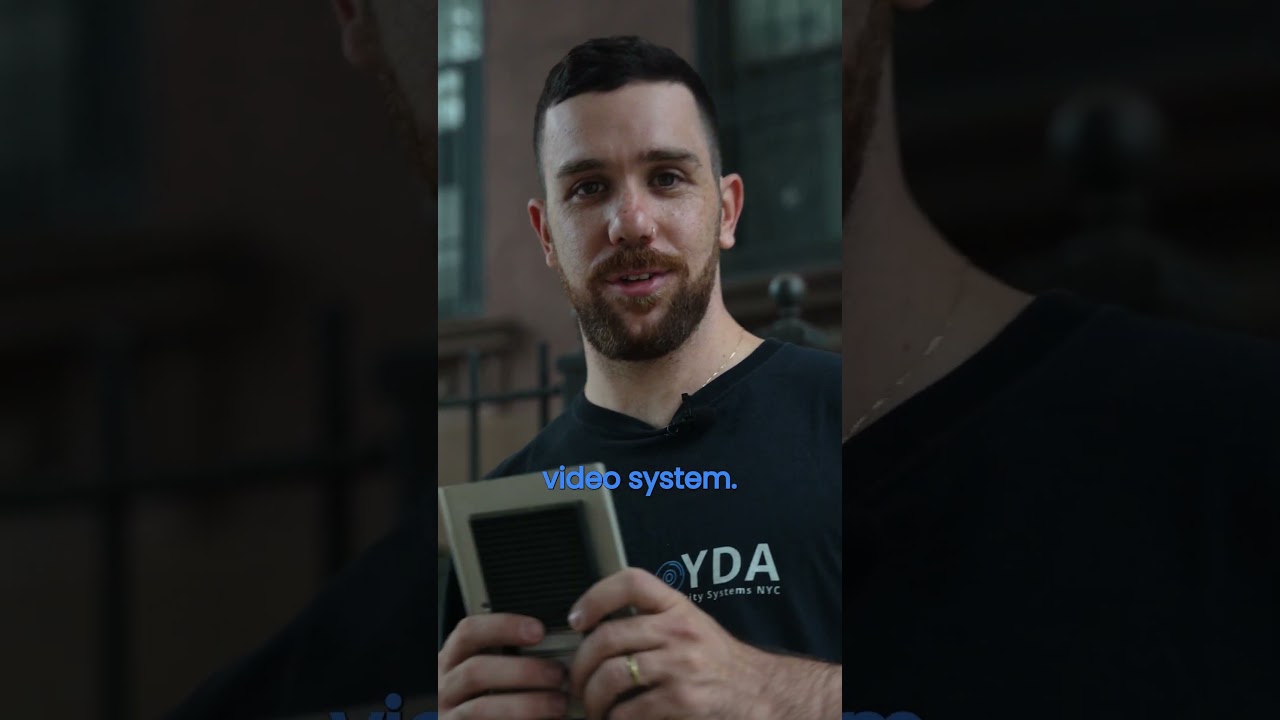
See an example of an NYC intercom installation using existing building wiring:
Who uses the system and what does each person need?
Visitors need to find the right resident, place a clear call, and receive understandable entry instructions. Residents need to identify who is calling, hear or see the visitor clearly when the system supports it, and respond reliably. They can then decide whether to release the entrance. Property staff need an accurate directory and a practical way to record faults, such as calls that fail for one unit or a door release that doesn’t operate.
Needs can vary within the same building. Some residents may use an in-unit handset or monitor, while others may answer through a telephone entry setup. Available response methods depend on the installed equipment, wiring, and configuration.
How is an intercom different from access control?
An intercom handles communication between the entrance and an occupant. Access control manages whether entry is authorized, often through credentials such as a key fob or card, and may connect to electric strikes or magnetic locks. The systems can work together, but they aren’t interchangeable. An intercom doesn’t necessarily include credential management, video, or remote features. Confirm what the building’s equipment supports before planning changes.
How Multi-Tenant Intercom Components Work Together
A shared entry system relies on several connected parts: the visitor-facing panel, the resident’s phone or station, the communications path between them, and the hardware that controls the entrance. A fault in one part can affect a specific step. For example, a resident may hear a call but still be unable to release the door if the release circuit or connected lock isn’t operating correctly.
From the entrance panel to the resident
A visitor uses the panel directory or calling method to select a resident or unit. The panel routes the call through the building’s wiring or another communications connection to the resident endpoint. Depending on the installation, that endpoint could be an older handset, an in-unit monitor, or another supported phone. Older and newer devices may use different connections or communicate in different ways, so check compatibility rather than assume it.
Audio lets the visitor and resident speak. Video adds an image of the entrance area, giving the resident visual information to consider before responding. Neither option alone confirms a visitor’s identity. The right setup depends on what residents need to assess, what the current equipment supports, and how the building is wired.
From a resident response to the building entrance
If a resident chooses to admit a visitor, pressing the release control sends a signal through the intercom system to compatible door hardware. The command works as intended only when the system is configured for that hardware and the wiring and components are functioning.
An electric strike is fitted at the door frame and releases the latch when activated. A magnetic lock uses an electromagnet to hold the door closed and is controlled through its connected system. These are different hardware types, and the intercom’s release function must match what is installed at the entrance.
Door condition, wiring routes, device models, and building configuration can all affect how components work together. A panel that looks suitable on paper may not connect properly to an existing resident station or lock. Before selecting equipment, have the actual setup reviewed onsite. If door hardware, egress, or building requirements are uncertain, ask a qualified professional to assess them before making changes.
For a multi tenant intercom system NYC property, ask the installer to trace the full signal path, from the panel call to the resident response and door release. That review can help determine whether repair, integration, or replacement is appropriate. Intercom installation and repair are among the services provided by Unlimited Applications Security Company in New York City.
How to Evaluate Multi-Tenant Intercom Options for Your NYC Property
Choose equipment based on how residents and visitors use the entrance, not just on the features listed for a device. Audio-only systems let visitors and residents speak. Video adds a view of the entrance, which may help residents assess a caller before responding. Telephone entry may suit a building where residents answer calls on phones; video calling may suit residents who want a visual view. Some properties may need both, depending on resident needs and equipment compatibility. For a closer look at how a telephone intercom system compares with video intercom and access control options, see this guide to what NYC buildings should evaluate in 2026.
Before comparing options for a multi tenant intercom system NYC building, document the number of units and entrances, the existing panels and resident devices, and recurring complaints. Note whether calls fail for one apartment, one entrance, or throughout the building. Also record how staff maintain the directory and whether residents can comfortably use the current response method.
What should a property manager assess before choosing?
Ask a technician to inspect the existing wiring, power, equipment models, and door-release connections onsite. This helps determine whether current components can be retained, whether integration is practical, or whether limitations call for a broader project. Include anticipated changes, such as adding units or entrances, so the proposed system reflects the property’s needs.
| Building need | Questions to ask | Verify onsite |
|---|---|---|
| Audio or video | Do residents need voice communication, a visual view, or both? | Entrance conditions, panel placement, and available resident devices |
| Telephone entry | How should calls reach residents, and what response method do they use? | Existing wiring and compatibility with phones or stations |
| Directory and scale | Who updates resident listings, and could units or entrances be added? | Panel capacity and the building’s current configuration |
| Door release | What hardware is installed, and does the current release operate reliably? | Connections between the intercom and door hardware |
Repair, integrate, or replace: which path fits?
A fault affecting one apartment or one function is a reason to request a diagnosis, not proof that the whole system needs replacement. If the existing panel, wiring, or resident stations remain serviceable, ask whether they can be repaired or integrated with selected new equipment. Confirm compatibility across the actual device models and door hardware.
Consider broader replacement only after documenting the system’s condition, the functions residents need, and any limitations that prevent a reliable setup. A clear assessment gives property managers a basis for comparing scopes and avoids treating full replacement as the default.
Planning a Multi-Tenant Intercom Project in NYC
A clear project plan starts with accurate building information. Before requesting an assessment for a multi tenant intercom system NYC property, gather equipment labels, available system records, entrance details, and specific examples of current problems. Note which units or functions are affected and when the issue occurs, if known.
Prepare building information before requesting an assessment
Document the number of units and entrances, the resident stations or phones in use, and how the directory is updated. List what residents, staff, and visitors need from the system, including preferred ways to receive calls. Identify known door hardware, such as an electric strike or magnetic lock, and note any existing connections to access control or cameras. These details help the technician assess the actual setup instead of relying on assumptions.
Next, arrange an onsite review of the equipment, wiring, power, and door-release connections. Review the proposed scope before work begins. Ask for written confirmation of which equipment will be installed, which existing components will remain, what connections may change, and who will test each function. This makes it easier to compare a repair or integration plan with a broader replacement.
Coordinate installation or repair in an occupied building
Intercom work can involve shared entrances and, depending on the setup, equipment inside apartments or other building areas. Ask which locations need access and how residents will be notified. Confirm the planned work sequence and who will coordinate entry to affected areas. Clear communication helps residents understand what may be affected and when their cooperation is needed.
Before considering the work complete, agree on how the system will be checked. Testing should cover representative calls from the entrance panel to resident devices, as well as door-release operation. Confirm how any issues found during testing will be documented and addressed.
For additional preparation guidance, see this guide to professional intercom installation in 2026. If your building needs an assessment or help planning intercom installation or repair, contact an NYC intercom provider to discuss the existing equipment and project scope.
Keeping NYC Multi-Tenant Intercom Systems Reliable
Changes in system behavior can help managers pinpoint a fault before it affects more residents. A simple symptom log makes reports easier to compare and gives a technician useful information for diagnosis. For a multi tenant intercom system NYC building, record the date, affected unit or entrance, device involved, and whether the issue has happened more than once.
What system symptoms should managers document?
Record what failed rather than only noting that the intercom “isn’t working.” Sort reports by function:
- Audio: No call, one-way sound, or unclear communication.
- Video: No image or an image that doesn’t appear consistently.
- Directory: A missing or incorrect listing, or a call routed to the wrong unit.
- Door release: The resident responds, but the entrance doesn’t release as expected.
Also note whether the symptom affects one resident, several units, or every call at an entrance. A report from one apartment may point to a different issue than similar complaints from multiple residents, though only an inspection can establish the cause. Residents should report symptoms to building staff rather than open panels or handle electrical components.
When should a building request professional intercom service?
Request professional diagnosis for recurring faults, a release problem, or symptoms affecting multiple residents. Routine checks can help staff notice changes: place a test call, confirm directory listings are current, and verify that the door-release function responds as expected. Record any failed check and arrange an assessment instead of repeatedly testing a malfunctioning component.
Intercoms and door hardware can affect one another. A technician can assess the panel, resident devices, wiring, and connected electric strike or magnetic lock together to help determine whether repair is sufficient or another change is warranted. System-wide replacement shouldn’t be the default response to an isolated fault. Diagnosis can clarify which components are causing the problem and whether existing equipment can remain in service.
For more guidance on identifying faults and restoring operation, read about professional intercom repair in NYC. If your building needs an assessment, repair, or installation, discuss your intercom system with an NYC specialist and share the symptoms your staff has documented.
Make Your Building’s Entry System Work as One
A dependable multi tenant intercom system NYC residents and staff can use starts with a clear view of the full entry process. The panel, resident devices, wiring, and door hardware need to work together. Before choosing an upgrade, document building needs and existing equipment, then confirm compatibility onsite. A fault doesn’t automatically mean the entire system must be replaced; a professional assessment can help determine whether repair, integration, or a broader upgrade makes sense.
Routine checks matter, too. Keep the directory current, note recurring call or release problems, and arrange diagnosis when issues affect residents or building operations. Unlimited Applications Security Company provides intercom installation and repair for Aiphone, Comelit, Siedle, Lee Dan, and Tektone systems, along with related physical security capabilities including electric strikes, magnetic locks, CCTV, and access control.
For help assessing existing equipment or planning an intercom project, contact Unlimited Applications Security Company to discuss your NYC building’s intercom needs. Share the equipment details and symptoms your staff has recorded to start a practical conversation about the next step.
Frequently Asked Questions
What is a multi-tenant intercom system?
A multi-tenant intercom system lets visitors contact occupants through shared building entry equipment. In an NYC apartment building, a visitor typically uses an entrance panel to call a unit, while a resident answers through an apartment phone or station. Depending on the equipment and wiring, calls may include audio or video and may signal compatible door-release hardware. Confirm what the existing system supports, since functions vary by building configuration.
Can one intercom system serve every apartment in a building?
Yes, a shared intercom can serve multiple apartments if the equipment and building setup support the required units and entrances. Capacity depends on the panel, wiring, resident devices, and building layout, so adding apartments may require more than updating a directory. For a multi tenant intercom system NYC property, document the units and entry points, then have a technician verify equipment and compatibility before planning an expansion.
What is the difference between an intercom and an access-control system?
An intercom lets a visitor communicate with an occupant, who can decide whether to respond or release an entrance. Access control manages whether a person or credential is authorized to enter. The functions may connect in a building, but they aren’t the same. Ask which capabilities the installed equipment includes and whether separate hardware or configuration is needed for credential-based entry or door release.
Should an NYC apartment building choose an audio or video intercom?
The right choice depends on resident needs, entrance conditions, and the building’s infrastructure. Audio supports voice communication; video adds a visual view when compatible equipment is installed. Consider how residents answer calls, what devices they use, and whether existing wiring supports the desired setup. A site assessment can help confirm compatibility before the building selects audio, video, or a system that combines both.
Can a new intercom work with existing door hardware?
It may, but compatibility depends on the intercom, wiring, door-release equipment, and entrance configuration. Electric strikes and magnetic locks are different hardware types, so don’t assume they can be substituted or connected in the same way. Ask a technician to inspect the installation, identify which components can be retained, and explain any required adjustments. Confirm that call and door-release functions will be tested after the work.
How can a building manager tell whether an intercom problem affects one unit or the whole system?
Record which apartments, entrances, and functions are affected, and whether the issue repeats. Note if the problem involves calling, audio, video, directory listings, or door release. Compare reports from residents without opening panels or attempting electrical repairs. If only one unit reports a fault, that helps distinguish it from similar symptoms across an entrance, but a technician will need to assess the equipment to identify the cause.
When should a building repair an intercom instead of replacing it?
Request a repair assessment when a fault is localized, intermittent, or not yet diagnosed. A technician can examine the intercom, wiring, and connected door hardware to identify the likely cause and determine whether existing components remain usable. Replacement may be appropriate if the system can’t meet the building’s documented needs, but it shouldn’t be assumed from one symptom. Base the decision on the system’s condition and a clear assessment.