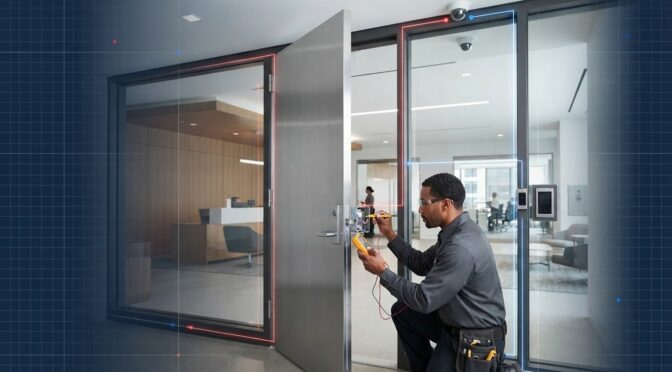
What if the electric strike that fits your office door still isn’t the right choice? A strike has to work with the existing lock, frame, wiring, and access control system. If any part is incompatible, the door may not release reliably, and installation may cause avoidable disruption. That’s why electric strike installation for office door security starts with assessing the whole entry system, not selecting hardware in isolation.
It’s reasonable to want secure, dependable entry without interrupting the workday or confusing staff during a power outage. The right hardware and operating configuration depend on how the door is used, how it’s built, and what happens when power is lost. Fail-safe and fail-secure operation must also be considered alongside life-safety requirements, especially when a door is part of an egress route or has a fire rating.
This guide explains how electric strikes work, what affects compatibility, and what a professional assessment should cover for a New York City office. You’ll also learn what to ask about access control, installation planning, and applicable safety requirements before approving the work.
Key Takeaways
- An electric strike releases a door’s latch when it receives an authorized signal from a connected entry device or access control system.
- Before selecting hardware, have the installer check the door, frame, latch, hinges, and existing lock to confirm a suitable match.
- Fail-safe and fail-secure describe different responses to power loss. The appropriate operation depends on the door’s use and safety requirements.
- For electric strike installation for office door access, ask how the installer will assess wiring, system compatibility, work coordination, and functional testing.
- A site assessment can clarify hardware options and installation needs before you approve work at your NYC office.
What an Electric Strike Does for an Office Door
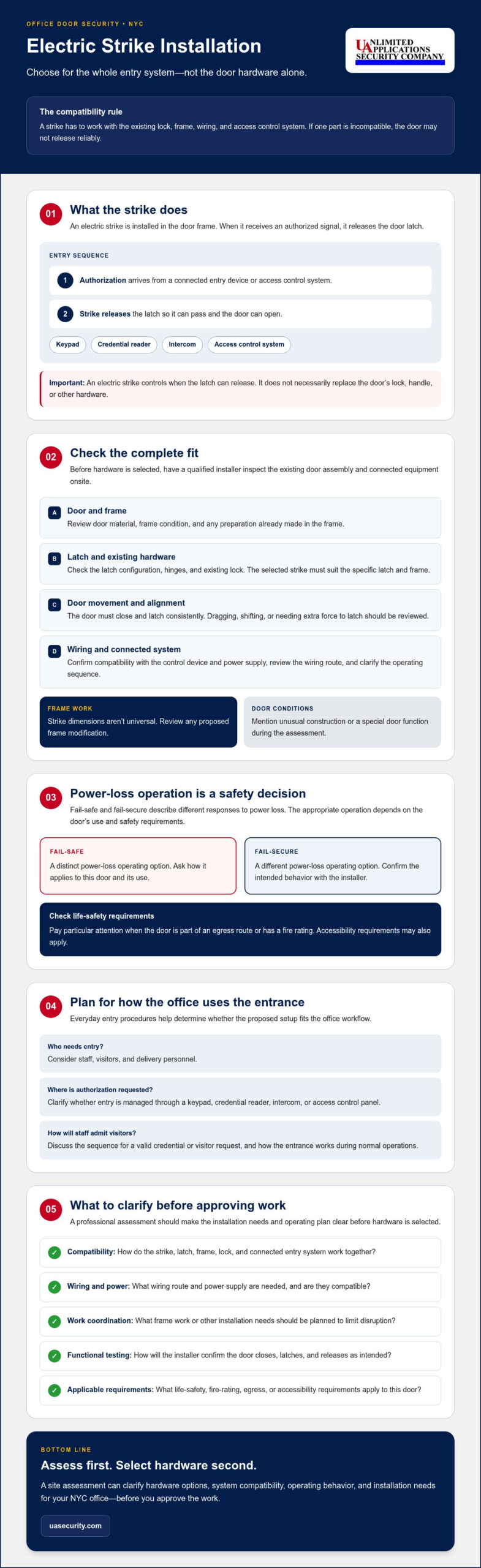
An electric strike is an electrically controlled component installed in a door frame that releases the door latch when it receives an authorized signal. The signal may come from a keypad, credential reader, intercom, or access control system. The strike controls when the latch can release. It does not necessarily replace the door’s lock, handle, or other hardware. For a basic overview of the mechanism and common operating terms, see What an Electric Strike Does.
How an electric strike releases a door latch
The strike sits in the frame opposite the latch on the door. When the door closes, the latch engages with the strike. After an authorized signal, a movable part of the strike releases or shifts to let the latch pass, allowing the door to open without someone using a key at that moment. The exact operation depends on the strike and the connected system.
The door still needs to close properly, and the latch must line up with the strike. A sagging door, misaligned frame, or unsuitable lock can interfere with engagement or release. An electric strike installation for office door access should therefore account for the existing door and hardware, not just the electrical connection. For commercial facilities addressing underlying lock and latch alignment, mobile locksmith providers like Two Keys Mobile can help ensure physical door mechanisms work smoothly before adding electronic controls.
When an office may consider an electric strike
An office might use an electric strike to manage entry for staff, visitors, or deliveries. For example, a credential reader could control staff access, while an intercom lets an employee authorize a visitor before releasing the door. These are possible configurations, not a guarantee that every strike will work with every reader or intercom.
A single controlled entry may need a different arrangement from an office managing access across several doors. For larger facilities designing comprehensive building security, specialists like Links Integrated Systems demonstrate how advanced access control systems coordinate across diverse entry points. Consider who needs entry, where they request authorization, and how staff will admit visitors or delivery personnel. These everyday procedures help determine whether the proposed setup fits the office’s workflow.
Suitability depends on the specific door, frame, latch, locking hardware, and connected entry equipment. An electric strike isn’t a universal replacement for a lock, and it may not be appropriate for every door. Ask a qualified installer to inspect the existing assembly and explain how a strike would work with it before hardware is selected. In New York City, assessing the door and connected access control together can clarify what the installation involves.
Check Office Door Compatibility Before Selecting an Electric Strike
An electric strike can be suitable in principle and still be the wrong fit for a particular office door. Before choosing hardware, have a qualified installer inspect the door assembly and connected entry equipment onsite. Confirming compatibility first can identify alignment problems, wiring needs, and frame work that may affect the installation.
What the installer should inspect at the door
The assessment should cover the door material, frame condition, latch configuration, hinges, existing lock, and any preparation already made in the frame. The door must close and latch consistently before electrically controlled hardware is added. If it drags, shifts, or needs extra force to latch, have those conditions reviewed instead of assuming they are an electric strike problem.
Strike types and dimensions aren’t universal. The selected unit must suit the specific latch and frame, and the installer should review any proposed frame modification. If the door has unusual construction or a special function, mention it during the assessment. Accessibility is another consideration. The United States Access Board’s guidance on ADA Compliance for Office Doors covers door hardware and maneuvering clearances. Ask the appropriate professional to confirm which requirements apply to your project.
How the strike connects to access control
Identify what will authorize the door to release: a keypad, credential reader, intercom, or access control panel. The installer should check that the chosen strike works with the control device and power supply, review the wiring route, and explain the intended operating sequence. For example, clarify what happens after a valid credential or visitor request, and how staff will use the entrance during normal operations. If the strike is part of an intercom entry system, this professional intercom installation guide can help you consider the connected equipment as a whole.
Gather these details before discussing electric strike installation for office door access:
- Door and frame material, condition, and any visible damage
- Existing lock and latch type, and whether the door closes and latches reliably
- Entry device or system that will authorize release
- Known power supply and wiring information, if available
- How staff, visitors, and deliveries are expected to use the entrance
You don’t need to identify the exact strike yourself. Share what you know and ask the installer to verify the fit, wiring, and system operation onsite. For a practical starting point, review electric strike and access control services alongside your office’s entry requirements.
Fail-Safe or Fail-Secure: Choose the Right Office Door Operation
Before approving electric strike installation for office door access, decide what the opening should do if power is interrupted. Fail-safe means the strike allows entry when power is lost, while fail-secure means it remains locked from the secured side. Neither mode is automatically right for every office door. The door’s function, how people exit, and applicable life-safety requirements all matter.
How fail-safe and fail-secure behavior differs
With a fail-safe arrangement, a power interruption can release the strike for entry from the secured side. With a fail-secure arrangement, the strike generally stays locked against entry from that side. The actual result depends on the device, wiring, and the rest of the door hardware, so confirm the specific behavior rather than relying on the label alone.
These terms describe access through the strike, not necessarily whether a person can leave the room. A door may allow normal egress using its handle or other hardware even when entry from outside is restricted. Ask the installer to explain how the door behaves during normal operation, an access control release, and a power interruption. Have the proposed wiring and hardware operation checked together.
What office managers should verify for safe operation
Start by identifying the door’s role. Is it part of an exit route? Does it serve a space with other life-safety functions? Who needs to enter, and how must occupants leave if power or the access system is unavailable? These answers help the appropriate professionals assess which operating mode and hardware arrangement may be suitable.
Don’t treat the strike as the only factor in safety or compliance. The complete opening, including its door, lock, exit hardware, access controls, and wiring, may need to be considered. Requirements can depend on the building and the door’s use. Have qualified parties review the current New York City requirements that apply to the specific installation, and verify code-specific guidance with the appropriate authority before approving work.
- Ask which side of the door remains secure during a power loss.
- Confirm how people can exit under normal conditions and during a power interruption.
- Ask how the reader, intercom, or access control panel affects release.
- Request functional testing of the agreed operating sequence before relying on the door.
A clear explanation of these scenarios helps prevent surprises after installation. Ask the installer to document the intended behavior and test it with the connected equipment, so office staff understand how the door should operate during everyday use and a power loss.
What to Expect During Professional Electric Strike Installation
A professional installation should follow a clear sequence, from checking the opening to testing the connected entry system. The work depends on the door’s condition, hardware compatibility, wiring route, and building requirements. Before scheduling electric strike installation for office door access, ask how the installer will assess these factors and coordinate work around the office’s entry needs.
- Assess the site. Review the door, frame, existing lock, access control equipment, power supply, and potential wiring path.
- Select compatible hardware. Confirm the strike suits the specific latch and frame, and clarify how the access control system will trigger release.
- Plan the work. Identify any frame work, building requirements, access restrictions, and coordination needed with facilities or building management.
- Install and connect. Fit the selected hardware and connect it to the agreed control device and power source.
- Test the completed setup. Check authorized release, normal latching, and the agreed entry sequence using each planned control method.
Planning installation in an occupied NYC office
Before work begins, discuss the office’s operating schedule, access routes, work-area constraints, and how staff and visitors will enter while the doorway is affected. Coordinate any temporary entry procedure with the responsible building or facilities contact, and tell staff what to expect. If the strike connects to an intercom that needs attention, review professional intercom repair in NYC as part of planning the entry system.
Testing the door and access-control sequence
Testing should confirm that each agreed credential or control method authorizes release, and that the door closes and latches correctly afterward. Ask the installer to walk through the expected sequence with you, including what staff should observe during normal use. If compatibility, wiring, or life-safety questions remain unresolved, document them and agree on follow-up before treating the installation as complete.
A site assessment can help limit surprises, but the work plan should reflect the actual door and building conditions. For electric strikes and connected access control equipment, contact Unlimited Applications Security Company to discuss your office entry setup and installation considerations.
Choosing an NYC Electric Strike Installer and Planning Next Steps
A reliable plan starts with an installer who evaluates the actual door and connected access control equipment, rather than recommending hardware based on a description alone. For electric strike installation for office door access, the assessment should consider the physical door, wiring, controls, and entry workflow together. That gives you a clearer basis for reviewing the scope before approving work.
Questions to ask before approving the work
Ask the installer to explain which onsite findings will determine the strike type and installation scope. The door, frame, latch, existing lock, wiring route, and connected controls should all inform the recommendation. If additional frame work or changes to the existing system may be needed, ask what they involve and why.
Clarify who will review applicable building and life-safety requirements, and which questions need confirmation from the appropriate authority or building representative. Then ask how the completed door and its connected controls will be tested. A useful testing plan should cover authorized release, normal closing and latching, and the agreed entry sequence.
- How will you confirm that the strike fits the existing door, frame, and lock?
- What wiring and power supply details affect the proposed setup?
- How will staff enter and exit during normal use and relevant power interruptions?
- Who should confirm building or life-safety requirements for this opening?
- Which controls will be tested, and how will unresolved issues be documented?
- How will the work area and temporary entry procedures be coordinated?
Arrange a site assessment for your office door
To make an initial discussion more useful, gather what you know about the door and frame, existing lock, and any access control equipment. Note whether entry depends on a credential reader, keypad, intercom, or more than one method. Describe how employees, visitors, and deliveries use the entrance, including any integration needs with an existing intercom or reader.
Unlimited Applications Security Company provides electric strikes and access control solutions in New York City, alongside intercom and other physical security systems. Discussing the door and connected equipment together can help clarify what needs to be assessed and what questions remain before work is approved.
If you’re planning an office entry upgrade, contact Unlimited Applications Security Company to discuss your door, existing system, and NYC security hardware needs.
Plan Your Office Door Upgrade With Confidence
A dependable electric strike setup starts with the whole opening, not the hardware alone. Confirm that the strike suits the existing door, frame, latch, and access control equipment. Then agree on how the door should respond to authorized entry, power interruptions, and everyday use, and ask for those functions to be tested before relying on the system.
Careful planning for electric strike installation for office door access can clarify wiring, work coordination, and questions about safe operation. If an intercom is part of the entry process, consider how it will work alongside the strike and other controls.
Unlimited Applications Security Company lists electric strikes and electronic access control among its physical security offerings, and also provides intercom installation and repair for connected entry systems. To discuss your office door and existing setup, contact Unlimited Applications Security Company about an electric strike. A clear assessment is a practical first step toward planning an entry system that fits your workplace.
Frequently Asked Questions
What is an electric strike on an office door?
An electric strike is a component in the door frame that works with a compatible latch and can release it after receiving an authorized signal. The signal may come from an access control device, such as a keypad, credential reader, or intercom. The door still needs to close and latch correctly. For electric strike installation for office door access in NYC, have an installer assess the existing lock, frame, wiring, and connected system before selecting hardware.
Can an electric strike work with an office intercom or access control system?
An electric strike may work with an intercom, keypad, credential reader, or access control system if the hardware and electrical requirements are compatible. The installer should identify the equipment and verify the release signal, power supply, wiring, and intended operating sequence. Don’t assume a strike will connect directly to every existing system. In a New York City office, an onsite assessment can help determine how the door hardware and entry equipment should work together.
What is the difference between fail-safe and fail-secure electric strikes?
Fail-safe and fail-secure describe how a device responds when power is lost, but the exact behavior depends on the hardware and installation. Neither mode is right for every office door. Consider both entry from the secured side and how people exit, which may involve separate door hardware. Ask a qualified installer to assess the opening’s function and confirm applicable requirements before recommending a configuration for your NYC workplace.
How long does electric strike installation for an office door take?
Installation time depends on the existing door and frame, wiring route, power and control equipment, and whether modifications or troubleshooting are needed. The number of doors and the office’s entry requirements can also affect the work plan. Rather than relying on a generic time estimate, ask the installer to assess the actual site and explain the expected scope. This helps you plan access and staff communication around the work.
Does an office electric strike need to meet fire or building code requirements?
Requirements can depend on the door’s location, use, and life-safety function. For a New York City project, ask the qualified professionals involved to review current requirements for the specific building and opening, and confirm code or approval questions with the appropriate authority. Don’t select fail-safe or fail-secure operation based only on preference. An electric strike alone doesn’t establish whether the complete door opening meets applicable requirements.
Can an electric strike be installed on an existing office door?
It may be possible, but suitability depends on the door, frame, latch, existing preparation, wiring, and access control equipment. An installer should check whether the door closes and latches reliably, identify any needed modifications, and confirm how the completed setup should operate. If the existing opening or hardware isn’t suitable, ask for a clear explanation of the issue and what alternatives may fit the door’s function.
What should I ask an NYC installer before scheduling electric strike work?
Ask how the installer will assess the door and frame, confirm hardware and access control compatibility, and review applicable building and life-safety questions. Find out how authorized release and normal latching will be tested, what work-area coordination is needed, and whether connected intercom equipment is part of the assessment. Share how staff, visitors, and deliveries use the entrance. Clear answers can help you understand the proposed scope before approving work.